



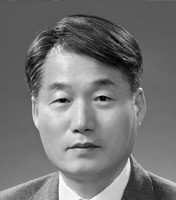
2019 Humanities and Social Sciences Laureate
Geun Lee
CV
B.S., Economics, Seoul National University
M.A. Coursework Completed, Economics, Seoul National University
Ph.D., Economics, University of California, Berkeley
- University of Aberdeen, U.K. an assistant professor
- Professor at Seoul National University
- World Bank Consultant
- Seoul National University Institute of China / Director of Economic Research Institute
- Member of Science and Technology Hallym Institute
- Chairman, International Society of Calcium Peter (Germany)
- World Economic Forum (Switzerland) Council Member
- CIFAR, Canada(Canadian Institute of Advanced Studies) Fellow
Reason for Award
Lee Geun is a mid-career economist with extensive research experience in the field of economic development. He is internationally recognized for demonstrating the crucial role of ‘technological innovation’ in the economic development of latecomer countries. While many low-income countries have achieved economic growth by adopting technology and systems from advanced nations, many have fallen into the so-called “middle-income trap,” facing growth limitations at the midpoint. However, Lee’s research revealed the reasons why countries like South Korea and Taiwan overcame this trap and reached parity with developed countries, leaving a significant mark in the academic community.
In a representative paper published in Research Policy (2001), Professor Lee classified latecomer economic development into three types: ‘advanced-country path-following,’ ‘stage-skipping,’ and ‘path-creating.’ Based on an analysis of the Korean case, he argued that although the ‘path-creating’ type is riskier, it is essential for successful catch-up and leapfrogging. This paper has been cited over 1,100 times to date.
Furthermore, in his English-language book Schumpeterian Analysis of Economic Catch-up (2013), Lee proposed the ‘detour strategy,’ which suggests that latecomers may need to take a path opposite to that of advanced countries during the catch-up phase. This strategy is categorized under the ‘path-creating’ type. This work earned him the Schumpeter Award from the International Schumpeter Society headquartered in Germany. While the award had previously been given to economist Aoki of Stanford University as an East Asian scholar, Lee was the first recipient affiliated with a non-Western university. The book was published in Chinese by Tsinghua University and later translated into Persian.
Regarding the East Asian economic miracle, Lee has provided a globally recognized explanation. Whereas previous interpretations remained within a dichotomy of ‘market versus information,’ Lee applied the Schumpeterian theory of national innovation systems to explain both the success of East Asia and the failures of Latin America, extending this analysis to China and India as well. Methodologically, he pioneered a new empirical approach by quantifying and indexing the concept of national innovation systems for economic analysis.
This year, Cambridge University Press published his new book, The Art of Economic Catch-up: Barriers, Detours and Leapfrogging in Innovation Systems. According to Google Scholar, Lee’s total citations amount to approximately 7,000, with an h-index of 39, demonstrating his global academic influence and authority.
Acceptance Speech
I am deeply honored and grateful to receive the Kyung-Ahm Award, the highest recognition in South Korea for scholars in the humanities and social sciences. The field of humanities and social sciences is broad and diverse, making it very difficult to compare achievements across different disciplines and select just one recipient. While I acknowledge my own limitations, I believe I have met the level of achievement and qualifications befitting the prestige and honor that the Kyung-Ahm Award has built over the years.
In fact, I have considered the Kyung-Ahm Award a goal I wanted to achieve for several years. I especially appreciated that the award is intended not as a final recognition in a scholar’s career but as encouragement to continue advancing research. With this in mind, I hoped to receive it before getting too old. I am truly thankful to Chairman Song Geum-Jo and the foundation for making this possible and for giving me the motivation to strive even harder.
For me, this award is not the end of my research but rather a stepping stone. I have a packed research agenda ahead, including writing at least two more English-language books. The prize money will be a significant practical help in carrying out these plans. Some may think humanities and social sciences do not require much funding, but disseminating research results domestically and internationally requires funds—for example, for travel and presentations at overseas conferences. Moreover, my field of economics involves extensive collection and processing of statistical data, which incurs substantial personnel costs. Although my two English books were published by Cambridge University Press, I have personally spent over ten million Korean won purchasing copies to send to scholars abroad. Such expenses are difficult to cover through official research funds, so this award allows me to freely distribute my books to colleagues worldwide. Especially in my field, which focuses on the economic development of latecomer countries, I often receive requests from scholars and students in less wealthy countries to send copies. Now, thanks to this award, I can fulfill these requests. By paying a fee to the publisher, my books can be made freely downloadable by anyone, which will further spread their reach globally and increase citations.
What makes receiving the Kyung-Ahm Award even more meaningful to me is that it gives me the courage to publicly declare my next goal: winning a major international prize, specifically the Nobel Prize. Interviews and achievements of past Nobel laureates show that they pursued unique research topics rather than following existing trends. They chose subjects that are different yet widely recognized and heavily cited. This is no easy task. Choosing a topic that no one else studies risks being ignored, while following popular topics can yield some papers but rarely leads to citations by leading Western scholars. In other words, it is very challenging to do novel research and gain widespread recognition simultaneously.
Over the past 20 years, my research has focused on the economic development of latecomer countries—catch-up and leapfrogging strategies. Growing up in Korea, the only country to transition from one of the poorest to a developed nation, I am uniquely positioned to study this historically significant subject. My key discovery is that the start of catch-up depends on learning and imitation of advanced countries, but ultimately, a different kind of innovation and path creation is required—a paradox of catch-up. Simply put, “you cannot catch up by just catching up.” The former “catching up” means imitation, while the latter means overtaking or surpassing. It is an obvious truth that mere imitation cannot surpass the pioneer.
A concrete example of this paradox is Korea’s success in specializing in short-cycle technologies (such as IT), where the technology life cycle is brief. In such fields, even existing advanced technologies quickly become obsolete, lowering entry barriers for latecomers and enabling rapid progress. Additionally, frequent innovation in these fields leads to high growth potential. This technological life cycle can be quantitatively measured using patent citation data, with long-cited patents indicating long cycles typically dominated by advanced countries. Using this indicator, I quantitatively demonstrated the growth of emerging economies like Korea and Taiwan. The criterion that a latecomer’s field should differ from the leader’s while maintaining high growth potential aligns with the criteria for choosing Nobel-worthy research topics. In other words, the secret of catch-up in the real economy and how to achieve catch-up in economics as a discipline follow the same principles.
Please continue to encourage and observe my efforts to complete this “catch-up economics” and simultaneously achieve breakthroughs in the discipline of economics. Had I not received this award, I might have given up halfway. Now, with renewed vigor and resolve, I will continue to work hard. Thank you.