



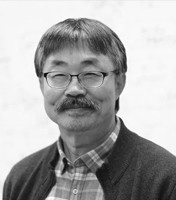
2019 Natural Sciences Laureate
Young Hee Lee
CV
- B.S., Physics, Chonbuk National University
- Ph.D., Physics, Kent State University, USA
- Director, Center for Nanoparticle Research, Institute for Basic Science (IBS)
- Professor, Department of Physics, Sungkyunkwan University
- Director, WCU Program, Department of Energy Science, Sungkyunkwan University
- Lecturer & Professor, Department of Physics, Chonbuk National University
- Visiting Scholar, Michigan State University, USA
- Visiting Researcher, Ames National Laboratory, USA
- Program Leader (PL), Physics Division, Ministry of Education, Science and Technology
- Director, National Research Laboratory (NRL) Program
- Planning Committee Member, Creative Research Initiative Program
- Executive Director for Advanced Technology, Korean Physical Society
- Member, The Korean Academy of Science and Technology (KAST)
- Associate Editor, ACS Nano
Reason for Award
Professor Young Hee Lee of Sungkyunkwan University has published numerous outstanding research achievements in the field of nanomaterials within condensed matter physics.
Beginning his career in solid-state theory, he later expanded into experimental research, producing significant results in nanomaterial synthesis and property studies, and establishing himself as a global leader in the field.
Among the five representative works he submitted, his Science paper published during his postdoctoral research has been cited more than 4,600 times, while his first major research achievement at Sungkyunkwan University, published in Nature, has been cited over 220 times, making substantial contributions to the field. The remaining three representative works were published in Nature Physics and Science while leading a research group as Director of the Institute for Basic Science. These papers clearly demonstrate Professor Lee’s research leadership and creative capabilities.
His international activities and recognition are equally remarkable. Notably, he has been consistently invited to deliver plenary and keynote lectures at major international conferences. With more than 35,000 citations and an h-index of 90, Professor Lee is recognized as a researcher at the highest global level. He has also received numerous academic awards abroad, further underscoring his international standing. Moreover, his continued production of world-class research results serves as an outstanding example for other researchers.
Acceptance Speech
I consider it an immense honor to receive the Kyung-Ahm Prize, which embodies the noble intentions and will of the esteemed Kyung-Ahm Song Geum-jo. Despite my still insufficient research achievements, I bow my head in deep gratitude to the chair of the judging committee and the fellow judges who recommended me for this award. I also extend my sincere thanks to the executives of the Kyung-Ahm Education and Cultural Foundation who worked hard to prepare for this award.
I have read the autobiography of Mr. Kyung-Ahm, who lived his life with diligence, clearing away stones and plowing a field of gravel. I felt a deep connection to his spirit, as my own research struggles have ultimately been a process of walking step by step through a similar rocky field.
Like most researchers who began in the 1980s, I also faced a barren research environment. But now, we can compete shoulder-to-shoulder with leading researchers worldwide. I consider myself fortunate. Though I began my career in theoretical research, I realized that for Korea to build not only a foundation in basic research but also a strong industrial base both domestically and internationally, research in advanced materials was essential. Thus, I embarked on the bold adventure of experimental research.
Through synthesizing carbon nanotubes, discovering graphene, and identifying other new two-dimensional materials, I have personally enjoyed the excitement of new research results almost daily. Beyond material discovery, I have worked to uncover new physical phenomena related to these novel materials, and to identify materials necessary for practical applications. It is a point of pride that, in collaboration with Samsung Advanced Institute of Technology, we developed a field emission display using carbon nanotubes, elevating Korea to a leading position in the global nanotechnology field.
We also created self-replicating three-dimensional building blocks by combining carbon nanotubes and graphene, applying them to supercapacitors that achieved energy densities comparable to batteries while delivering ultra-high power density. Commercialization is currently being prepared in cooperation with related companies. In addition, we succeeded in synthesizing wafer-scale single-crystal graphene and single-crystal graphene/hBN heterojunction materials. I take pride in having demonstrated the potential to create industrially applicable materials while beginning my career as a basic researcher.
The central theme of my research is energy. I aim to discover materials and devices that can surpass the Shockley–Queisser limit of solar cell efficiency. To this end, I am conducting research to overcome the efficiency limit by creating two-dimensional material heterojunctions and utilizing charge amplification methods. I have also designed superconducting transistors using graphene/semiconductor junctions to realize zero-energy semiconductors, and I am advancing research on spin semiconductors that operate at room temperature. With significant progress being made, I cautiously predict that these results will soon be introduced to the world.
I have come this far driven by scientific curiosity. As the saying from the Bible goes, “Though your beginning was small, your latter days will be very great,” I feel I am still at the beginning. The end is still far away for me. I remain hungry. Each day, I enter the laboratory with an eager sense of anticipation for new discoveries. With this Kyung-Ahm Prize, I will redouble my efforts and strive to become a researcher whose future work is even more promising than the present.
This award belongs to all the graduates, students, and researchers in my laboratory who have worked tirelessly over the years. I send my love to all the laboratory staff who have stood by me and supported me to the end. Finally, I express my gratitude to my mother, who has endured despite her difficulties in mobility, and to my family especially my wife and children, to whom I have not been able to give as much as I should have for their unwavering support. Thank you.