



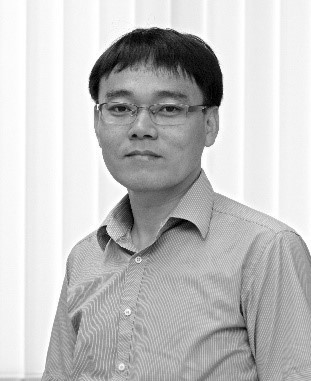
2019 Life Sciences Laureate
Cheol Sang Hwang
CV
- B.S., Seoul National University
- M.S., Seoul National University
- Ph.D., Seoul National University
- Postdoctoral Scholar, Division of Biological Sciences, Seoul National University, Seoul, Korea
- Postdoctoral Scholar, CALTECH, Pasadena, CA, USA
- Senior Staff Scientist, CALTECH, Pasadena, CA, USA
- Assistant Professor, Department of Life Sciences, POSTECH, Pohang, Korea
- Associate Professor, Department of Life Sciences, POSTECH, Pohang, Korea
Reason for Award
Professor Cheol-Sang Hwang of Pohang University of Science and Technology has achieved leading research accomplishments in protein degradation, a process critically important for maintaining cellular homeostasis, attracting significant attention from the scientific community.
Professor Hwang earned his B.S., M.S., and Ph.D. degrees from the College of Natural Sciences at Seoul National University. He subsequently served as a Postdoctoral Fellow and Senior Researcher at the California Institute of Technology before joining Pohang University of Science and Technology as an Assistant Professor in 2011, and he currently holds the position of Associate Professor.
Professor Hwang has been a global leader in studying N-terminal amino acid degradation signals and pathways located at one end of proteins. He discovered previously unknown protein degradation signals and published these findings in top-tier journals such as Science and Cell. Expanding the scope of his research, he recently demonstrated that not only prokaryotes but also eukaryotes can produce proteins in the form of N-formylmethionine, a process crucial for adaptation under extreme stress conditions, and published these results in Science.
Given these research accomplishments and numerous awards, Professor Cheol-Sang Hwang is widely recognized as a world-class life scientist.
Acceptance Speech
Hello, I am Cheol-Sang Hwang from the Department of Life Sciences at POSTECH.
First, I would like to express my sincere gratitude to my colleagues at POSTECH, the Korean Society for Molecular and Cellular Biology, and the distinguished selection committee for nominating me for the prestigious and highly honorable Kyung-Ahm Science Award.
I also wish to convey my deep respect and thanks to Chairman Song Geum-Jo and Director Jin Ae-On of the Kyung-Ahm Education and Cultural Foundation, who established this award—known as Korea’s Nobel Prize—by dedicating their lifetime wealth to society and fostering the advancement of education and culture in Korea.
As someone from Heuksando, the southernmost island of Korea, receiving the esteemed Kyung-Ahm Science Award feels like a dream. It is an immense honor.
Growing up on Heuksando, where reaching the mainland required navigating the vast sea for five to six hours, I experienced the harsh realities of survival. These early experiences on the island have become invaluable assets, shaping my perseverance and focus as a fundamental life sciences researcher.
While many academically inclined friends pursued law or medicine, I was drawn to life sciences through my close connection with nature. I enrolled in the Department of Microbiology at Seoul National University, where I received extensive guidance from my professors. I also learned the romance and patience of research from my mentor, Professor Kang Sa-Wook, and fellow members of the Biophysics Laboratory.
During my postdoctoral training under Professor Barshevsky at Caltech, I learned the rigor and passion of a life dedicated to thoughtful study and scholarship.
I am deeply grateful to Professor In-Hwan Hwang at POSTECH for providing me with the opportunity to work in the Department of Life Sciences and for supporting a research environment that allows intellectual freedom. I also thank Professor Ju-Yeon Yoo for supporting my early research through collaborative projects, as well as all those who have assisted and encouraged me along the way.
Our laboratory focuses on protein degradation, a process that determines the lifespan of proteins within cells. The hundreds of billions of proteins in our cells undergo constant synthesis and degradation. Failure to remove aged proteins can lead to degenerative neurological disorders, cancer, infections, and autoimmune diseases. Thus, cellular protein degradation is directly linked to diverse biological phenomena and disease mechanisms.
Shortly after joining POSTECH in 2011, through three years of intensive research with my students, we discovered that the methionine at the N-terminus of a protein simultaneously determines its synthesis and degradation. This finding was published in CELL in 2014.
Additionally, we found that the acetyl group attached to the N-terminus of almost all proteins not only triggers protein degradation but also plays a crucial role in blood pressure regulation, which we published in SCIENCE in 2015.
From 2014, supported by the Samsung Future Technology Promotion Foundation, we undertook more ambitious research. After five years of persistent investigation, we discovered that under extreme conditions, eukaryotic organisms—like humans—can synthesize and degrade proteins using N-formylmethionine, similar to bacteria. This finding was published again in SCIENCE in 2018.
I deeply thank all the students and researchers in my laboratory who devoted themselves to bold, exploratory studies day and night, as well as my POSTECH colleagues and collaborative researchers. I share this award’s honor with them. I also extend my gratitude to Professor Jung-Mok Kim, now at Hanyang University, who contributed to our discovery of the eukaryotic N-formylmethionine protein synthesis and degradation pathway.
Finally, I wish to thank my mother and mother-in-law for their constant care and support, and my wife and son, who have silently dedicated themselves to our family while I focus on research.
I will continue my work with humility, striving to become a scientist who embodies the philosophy and purpose of the Kyung-Am Science Award. Thank you for joining me on this honorable occasion and for your kind attention.