



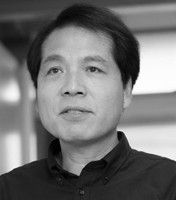
2019 Engineering Laureate
Sang Il Seok
CV
- B.S., Engineering, Kyungpook National University, Korea
- M.S., Engineering, Inha University, Korea
- Ph.D., Engineering, Seoul National University, Korea
- Postdoctoral Research Fellow, Cornell University, USA
- Research Director of Korea Research Institute of Chemical Technology, KRICT
- Researcher of Korea Research Institute of Chemical Technology, KRICT
- Professor, Division of Energy Sciences, Sungkyunkwan University, Seoul, Korea
- Professor, Ulsan National Institute of Science and Technology (UNIST)
Reason for Award
Professor Sang-il Seok at Ulsan National Institute of Science and Technology is an engineer leading the field of solar cells, a next-generation energy source attracting global attention. By pioneering the perovskite field as a next-generation material capable of overcoming the limitations of silicon-based solar cells, he has achieved world-class research outcomes.
Since 2013, Korea has consecutively set world records for “solar cell efficiency” certified and reported by the U.S. National Renewable Energy Laboratory (NREL). The perovskite solar cells developed by Professor Seok have been an essential contributor to these achievements. Moreover, the perovskite solar cells he leads in research and development offer advantages such as high-efficiency manufacturing processes and low cost, establishing them as the standard for next-generation solar cells.
In terms of publications, Professor Seok has served as the primary author on multiple papers in the world’s leading scientific and technological journals, including Nature and Science. Notably, one of his representative papers has received over 3,000 citations, drawing significant global attention.
Building on these research achievements, Professor Seok has founded a startup research company. Through this venture, he has promoted technology commercialization and transfer, greatly contributing to the development of the domestic solar cell industry. Professor Seok has established himself as a world-leading researcher in the field of solar cells and is expected to make significant contributions to the future advancement of the related industry.
Acceptance Speech
I would like to express my deep gratitude to Professor Hwanjin Noh of UST, who first recommended me as a candidate for the Kyung Ahm Award, as well as to the selection committee members and the Kyung Ahm Foundation staff who chose me as a recipient. The fact that I am able to receive this award today is the result of the combined support, encouragement, and collaboration of countless people. Therefore, this award is far too great to be attributed to personal glory alone, and I wish to share this honor and joy with everyone who has worked alongside me.
I began my journey as a researcher at the Korea Research Institute of Chemical Technology. The next-generation solar cells that have led to this honorable award actually stemmed from the survival instinct of trying to endure as a researcher. After being promoted from a senior researcher to a principal researcher, I faced the critical question of which field would allow me to secure stable funding while producing meaningful results, and it was within this context that I began my research. However, since I had no prior experience with solar cells during my degree or postdoctoral work, I deliberately avoided areas already well-studied by others and chose a field with little competition, which left only highly challenging topics. This became the main reason I pursued research on inorganic-organic hybrid solar cells, combining inorganic and organic materials.
Of course, I had ideas and meticulous strategies to solve these problems, but I painfully realized that the reason others avoided this field was not due to oversight—there was a reason. After approximately three years without results, in 2009 I achieved an efficiency of 5%, surpassing the roughly 4% efficiency previously reported for the long-studied solid-state dye-sensitized solar cells, and I submitted my first paper to a major journal. Although the editor did not accept it, the results were eventually published in another reputable journal, and even Nature, which had rejected the paper, featured it in a highlight article. Through continued research under the pressure of producing results, I was fortunate to lead the global application of perovskite materials in solar cells.
The success I have achieved in perovskite solar cells is almost entirely due to the passion and collaboration of the many researchers who worked with me, but my personal environment also played a small role. I am somewhat embarrassed to admit that my wife, a high school teacher, wakes up at 5:30 a.m. every day to prepare breakfast and lunch, leaving for work before 7 a.m. There was a period when adapting to this schedule was extremely difficult, but as it became our routine, I naturally became the researcher who arrived earliest at the lab, located just five minutes from home. This instilled in me a level of diligence and effort beyond most others. Unintentionally, this routine was noticed and emulated by younger researchers, which created opportunities for early-morning in-depth discussions and the start of our research. One of these discussions led to a publication in Nature Materials, and currently, nearly all research labs worldwide follow the principles and methods described in that publication. I dare say that all the results we have now, achieving efficiencies over 25%, are based on this foundational research.
In today’s era, publishing in high-impact journals such as Science or Nature is often considered the mark of excellent research, and I was honored to receive the Korean Science Award in 2017. However, as an engineer, I believe that research is truly valuable only when it leads to practical application. While the researcher does not necessarily have to commercialize the work directly, the research should at least be conducted with potential application in mind. Fortunately, the research I have conducted and continue to pursue has led to the creation of a startup research company in collaboration with other researchers, and we are simultaneously advancing technology commercialization. I believe that contributing to national economic and technological competitiveness in this way aligns with the very purpose of the Kyung Ahm Engineering Award.
Finally, I extend my heartfelt gratitude to my late parents and father-in-law, who are no longer here to witness this moment, as well as to my wife and mother-in-law present today, and my family in general. I also wish to share this joy with the former colleagues and juniors who endured hardships alongside me, my current laboratory members who share the dream of the future, and UNIST, which has provided continuous support for our research achievements.
While I cannot predict exactly where my research will go from here, I am confident that the work I pursue will align with the philosophy on which the Kyung Ahm Award was founded. I will once again strive to meet everyone’s expectations. Thank you.