



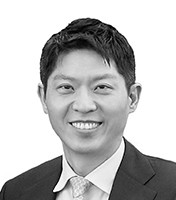
2018 Engineering Laureate
Hoon Sohn
CV
- B.S. Civil Engineering, Seoul National University
- M.S. Civil Engineering, Seoul National University
- Ph.D. Civil and Environmental Engineering, Stanford University
- Technical Staff Member, Los Alamos National Laboratory, NM, USA
- Assistant Professor, Dept. of Civil & Env. Eng., Carnegie Mellon University, USA
- Associate Professor, Dept. of Civil & Env. Eng., KAIST, Korea
- Adjunct Professor, Dept. of Aerospace Eng., KAIST, Korea
- Summer Faculty, Air Force Research Laboratory, OH, USA
- Professor, Dept. of Civil & Env. Eng., KAIST, Korea 2011~2012-Edward E. Curtis Visiting Professor, Purdue University
- Chair-Professor, Dept. of Civil & Env. Eng., KAIST, Korea
- Adjunct Professor, Michigan State University, USA
- Adjunct Professor, Dept. of Ele. Eng., KAIST, Korea
- Director of IOT Bridge Research Center, Ministry of Land, Infrastructure, and Transport ICT
Reason for Award
Professor Hoon Sohn, KAIST, School of Civil and Environmental Engineering, is an outstanding civil engineer who has made significant practical contributions to improving the safety of various structures, including bridges and buildings. He developed world-class smart sensors capable of real-time and automatic detection of cracks and damages in large structures from their early stages, and integrated these sensors into monitoring systems. This technology has recently been implemented to enhance the safety of the Yeongjong Bridge.
Professor Sohn completed his B.S. and M.S. degrees at Seoul National University College of Engineering and earned his Ph.D. in Engineering from Stanford University in 1999. He then served as an Assistant Professor at Carnegie Mellon University in the U.S. before joining KAIST in 2007 as the youngest tenured associate professor. In his early 40s, he was promoted to Chair Professor, reflecting his outstanding research abilities and achievements.
He has developed and commercialized multiple world-first technologies, including fatigue crack detection sensors and high-precision displacement measurement sensors, resulting in over ten technology transfers, more than 150 SCI publications, and over 65 domestic and international patents. His developed accelerometer-fusion displacement measurement systems have been applied to major bridge systems such as the San Francisco Bay Bridge in the U.S., the Xihoumen Bridge in China, and the Penang 2nd Bridge in Southeast Asia. Domestically, these systems have been implemented on the Yeongjong Bridge, the Inner Circular Elevated Highway, and the Gangbyeonbuk-ro, contributing significantly to the safety of these structures.
Through his exceptional technological developments, Professor Sohn has greatly contributed to national wealth creation and international recognition. Considering his research capabilities, he is expected to continue making substantial contributions to human welfare through enhanced structural safety. Accordingly, Professor Hoon Sohn is selected as the recipient of the Engineering Division of the 14th Kyung Ahm Prize.
Acceptance Speech
Hello, I am Hoon Sohn from KAIST.
First, I would like to sincerely thank Chairman Song Geum-jo, CEO Jin Aeon, the board members, and all staff of the Kyung Ahm Education & Culture Foundation for organizing this honorable event. I am also grateful to the relevant members of the Korean Society of Civil Engineers who recommended me as a Kyung Ahm Prize candidate and to Chairman Kim Do-yeon and all Kyung Ahm Prize judges for selecting me as a recipient.
My research field is Structural Health Monitoring (SHM), which involves installing sensors on various structures—such as civil, mechanical, aerospace, and electronic systems—to detect damage and evaluate safety in real time. It is akin to using a stethoscope to check a person’s health. Over the years, I have researched and developed a variety of smart sensors, along with sensing and damage detection technologies. As South Korea transitions into an aging society, infrastructure built rapidly during the 1970s–1980s is aging quickly. Growing public demand for the safety of aging infrastructure has also increased attention to the field of structural health monitoring, which I pursue.
In my roughly 25 years of research, one of the greatest challenges—and still the most difficult—is securing research funding that allows me to pursue the work I want. There were times when students’ salaries were delayed for several months due to lack of funds. In retrospect, however, these challenges became opportunities to conduct new research and even pioneer new areas.
Looking at past Kyung Ahm Prize recipients, most in natural sciences, life sciences, and even engineering have published at least one paper in journals such as Nature, Science, or Cell. By this standard, I may appear lacking. Due to the nature of my field, I have not submitted to such journals, and realistically, my future publications are unlikely to appear there. While I have never limited my research to what is possible or recognized by prestige, I am aware that winning a Nobel Prize—a pinnacle many scientists and engineers aspire to—is likely out of reach. Therefore, I have continually considered what goals to pursue, what research to undertake, and how to live meaningfully.
Recently, I was inspired by a presentation from Professor Han Dong-soo at our school and thought: “If I cannot win a Nobel Prize, I will try to live like Nobel.” As many know, Alfred Nobel accumulated immense wealth through his chemical and engineering inventions, such as dynamite, and numerous patents. He established multinational companies and donated 97% of his fortune to society, some of which funded the Nobel Prizes. Learning this, I thought: “This is it! It may be even more rewarding to give a Nobel-like prize than to win one.” When I later learned that I had been selected as a Kyung Ahm Prize recipient and read Chairman Song Geum-jo’s autobiography, I realized that the paths of Nobel and Chairman Song share remarkable similarities.
As a result, I have recently focused on the commercialization and practical application of the technologies I have developed and am preparing for entrepreneurship. This path is quite different from my past purely research-oriented work and presents many challenges, but I am determined to pursue it and aim for success rather than regret inaction. I hope that, by succeeding in commercialization, I can return not only as a Kyung Ahm Prize recipient but also as a donor or supporter of other awards, creating opportunities to meet you all again.
Finally, I would like to express my deepest gratitude to my parents, my wife, and my son, who are present at today’s ceremony. I also thank my students, who study and research diligently and make everything possible. Just as BTS has “the Army” as a fan base, I have the students of my Smart Structures and Systems Laboratory, who make all achievements possible. Thank you very much.