



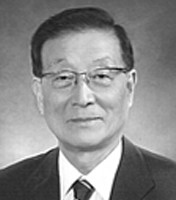
2017 Humanities and Social Sciences Laureate
Kyong Dong Kim
CV
- B.A., Seoul National University
- M.A. in Sociology, University of Michigan
- Ph.D. in Sociology, Cornell University
- Professor, Dept. of Sociology, Seoul National University
- Professor, Dept. of Sociology, North Carolina State University
- Professor, Department of Sociology, College of Social Sciences, Seoul National University
- Professor Emeritus, Seoul National University
- Member, National Academy of Sciences
- Distinguished Professor, Graduate School of Practical Theology
- Visiting Professor, College of Business, KAIST
Reason for Award
Professor Kyong-dong Kim is a leading figure in Korean sociology, widely recognized for his academic excellence both domestically and internationally. Even after retiring from Seoul National University in 2002, he has continued his active scholarly work, publishing more than ten books, exemplifying the model of a dedicated academic.
In particular, in 2017, he published three English-language books addressing his lifelong research focus on modernization in Korea and East Asia:
Alternative Discourses on Modernization and Development: East Asian Perspectives
Korean Modernization and Development: Alternative Sociological Accounts
Confucianism and Modernization in East Asia: Critical Reflections
These works, published by Palgrave Macmillan in the United Kingdom, represent an outstanding contribution that presents Korea’s modernization experience to the global academic community.
Key achievements of Professor Kim’s research include:
First, he attempts academic indigenization. Professor Kim creatively reconstructs the principles of social change using theoretical perspectives embedded in Yin-Yang dialectics and the concept of qi (energy), demonstrating originality in his approach. Moreover, he developed a new methodology, the Thematic Approach, to comprehensively describe and interpret the characteristics of social change.
Second, Professor Kim systematically revisits and theorizes modernization and development from the early 1960s—when Korea began its economic development plans—to the present. He defines modernization as adaptive change influenced by the West and reinterprets development as a value-laden concept aimed at improving human life. Based on this framework, he proposes a highly original model of a “mature advanced society,” purified through cultural cultivation, as a vision for future societies.
Third, Professor Kim deeply examines the role of Confucian thought in East Asian modernization. He critically analyzes both the strengths and limitations of Confucianism, urging reflection on how Confucian moral and ethical order can contribute to the creation of a new world civilization amidst societal moral challenges.
Overall, Professor Kyong-dong Kim has pioneered new research areas relevant to Korean society, including Confucian political culture, labor relations, future studies, and information society studies. He is a scholar who has simultaneously achieved the indigenization and globalization of Korean sociology. In recognition of these accomplishments, he has been selected as the recipient of the 13th Kyung Ahm Award in the Humanities and Social Sciences category.
Acceptance Speech
First and foremost, I am at a loss for words to properly express my gratitude to Dr. Song Geum-jo, Chairman of the Kyung Ahm Educational Foundation, for bestowing upon me the immense honor of the 13th Kyung Ahm Award in the Humanities and Social Sciences. I also wish to extend my sincere thanks to Chairman Kim Do-yeon of the Kyung Ahm Award Committee, the committee members, and my fellow scholars who devoted their efforts to the rigorous review process.
The Kyung Ahm Award, which honors the noble spirit of Mr. Kyung Ahm—who, through diligence and tenacity, built the major enterprise Taeyang Hwasung, contributing significantly to national industry and regional economic development—is an exceptionally meaningful and prestigious recognition. For someone like me, who has not accumulated notable academic achievements, receiving such a distinguished award is both humbling and deeply moving. I am keenly aware that this honor reflects the guidance and encouragement of my mentors, senior colleagues, peers, and junior scholars, and I accept it with humility and resolve to continue striving in my academic pursuits.
Allow me to share a few reflections today by recalling a particular insight I had in the early days of my academic journey, when I was still young and inexperienced. In 1961, I went to study in the United States with the simple hope of mastering the modern social sciences developed in the West. However, I quickly became disappointed with their approach, which seemed overly mechanical and quantitative. I realized that to truly understand and improve Korean society, I first needed to grasp the unique characteristics of our traditional cultural heritage.
Believing Confucianism to be the most prominent cultural tradition, I embarked on small-scale research exploring the historical and experiential aspects of Confucian values among Koreans. Although I published two papers from this work, the response from the academic community was limited, and I had to temporarily set this aside to focus on the pressing issues of modernization and development, which were central concerns at the time. Back then, Confucian traditions were often regarded as cultural residues to be overcome for the sake of societal development and modernization.
During the 1970s, while teaching at an American university, I recall colleagues asking me about Confucianism and Taoism. My inability to provide satisfactory answers made me painfully aware of my own ignorance. In the 1980s, as Western scholarship began to formally discuss the impact of East Asian Confucian traditions on modernization and development, I resolved to develop new theories better suited to explaining Korean social change, rather than relying solely on Western sociological frameworks.
To this end, I drew first on classical philosophies such as Confucianism and Taoism and then developed approaches grounded in the Korean social consciousness and practices that foreigners could not easily access. I reconstructed sociological concepts using the very language Koreans use, including terms such as jeong (affection), han (grievance), gi (vital energy), gi-saum (energy struggles), yeon-go (network ties), nunchi (social tact), myeongbun (moral justification), and shinbaram (collective enthusiasm). These concepts, difficult to translate, enabled me to build theories that could not have been invented by outsiders. This approach, which I term alternative discourses, is akin to a cultural declaration of independence in scholarship.
This year, three books synthesizing the results of these efforts were published in English by Palgrave Macmillan, presenting Korean modernization to the global scholarly community. My work on theorizing the rich elements of our culture will continue, as there remain many aspects yet to be explored.
Looking back, the delayed recognition of ideas I pursued over fifty years ago illustrates a recurring pattern. In the 1970s, I published two papers on civil society and volunteerism, reflecting insights gained while in the U.S., yet they went largely unnoticed due to the restrictive social climate. Only decades later, in the 2000s, did these ideas gain wider attention, culminating in a 2012 monograph entitled Voluntary Welfare Society, which has since become a reference in the field of volunteerism. Although ahead of its time, the eventual realization of these ideas exemplifies the unique trajectory of my academic journey.
I hope that the younger generation of Korean social scientists will overcome an overreliance on Western theories and methodologies, and actively pursue alternative discourses that draw on our cultural traditions and everyday language to study Korean society. Embracing cultural diversity in this way is a vital path toward achieving the universality of global scholarship.
Once again, I express my profound gratitude to Dr. Song Geum-jo and Dr. Jin Ae-eon for their immense kindness and support, and I wish them both continued health and longevity. Finally, I dedicate this honor to my late parents, who brought me into this world and nurtured me, as well as to my wife, Professor Lee On-juk—who has quietly provided unwavering support for my scholarship and writing—and to my two daughters, Professor Kim Yeo-jin and Prosecutor Kim Jin, whose love and encouragement have made this moment possible.
Thank you.