



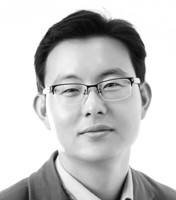
2017 Life Sciences Laureate
Tae Young Yoon
CV
- B.S. in Electrical Engineering, Seoul National University
- M.S. in Electrical Engineering, Seoul National University
- Ph.D. in Electrical Engineering, Seoul National University
- Research Fellow, Inter-University Semiconductor Research Center
- Research Associate, University of Illinois at Urbana-Champaign
- Research Associate, Howard Hughes Medical Institute, UIUC
- Professor, KAIST
- Director, NCRI Center for Single-Molecule Systems Biology
- Principal Investigator, Physics, Samsung Science and Technology Foundation
- Professor, Y-IBS Institute, Yonsei University
- Professor, Seoul National University
Reason for Award
Professor Tae-Young Yoon received his Ph.D. from the Department of Electrical and Computer Engineering at Seoul National University in 2004. He then completed a postdoctoral research program at the University of Illinois, USA, before joining the Department of Physics at KAIST as a faculty member in 2008. Since then, he has conducted pioneering research on membrane proteins, establishing the field of single-molecule biophysical approaches and gaining international recognition for leading research in this area.
In 2017, Professor Yoon was invited to Seoul National University as a faculty member in the Department of Life Sciences, where he continues to engage in education and research. Despite his relatively young age, he is considered an exceptionally promising scientist and a role model for the importance of interdisciplinary and convergent research in today’s scientific community.
Among Professor Yoon’s most notable achievements is his elucidation of the principles of three-dimensional folding of membrane proteins using highly precise magnetic tweezers capable of applying forces at the tens of pico-Newton (pN) scale. Building upon his magnetic tweezers expertise and single-molecule fluorescence microscopy techniques, he was the first in the world to determine the functions of synaptotagmin and NSF proteins that control neural communication, publishing these findings in two papers in Science. These accomplishments have significantly advanced biological understanding of neural system operations.
Furthermore, he developed a single-molecule co-immunoprecipitation method that enhanced the sensitivity and temporal resolution of conventional co-immunoprecipitation techniques—previously used for studying protein-protein interactions—by 10^5 times. Using this method, he established a technique to measure the activity of growth hormone receptor proteins in individual cancer tissues, representing another major contribution to the field.
Achieving such globally recognized results in the challenging area of membrane protein research within a relatively short period is widely regarded as an exceptional accomplishment. In summary, Professor Yoon’s outstanding contributions to biophysics have profound implications for both basic and applied biomedical research. His academic achievements, international research activities, educational contributions, and leadership in convergent research—leveraging knowledge across physics, chemistry, and biology to study life phenomena—are highly commendable.
Based on these contributions, Professor Tae-Young Yoon has been selected as the 13th Kyung Ahm Award recipient in the field of Life Sciences.
Acceptance Speech
First, I would like to express my heartfelt gratitude to Dr. Song Geum-Jo and Dr. Jin Ae-Eon, Chairpersons of the Kyung Ahm Educational Foundation, for awarding me this prestigious Kyung Ahm Award. I also sincerely thank all the senior professors who recommended me and participated in the review process.
Receiving such a distinguished award brings a flood of memories from the past twenty years since I began my graduate studies. I started my graduate studies in 1998 in the Department of Electrical and Computer Engineering at Seoul National University. I was one of three students who joined the laboratory of Professor Shin-Doo Lee, who had just moved from the Physics Department at Sogang University. Professor Lee made a profound contribution to the development of Korea’s liquid crystal display industry, helping it achieve global competitiveness. During my doctoral studies, I worked on applying liquid crystal display technology beyond laptop monitors to large-scale TVs, studying how to display images quickly without afterimages and how to maintain accurate colors even when viewing from different angles.
However, I always felt an unspoken thirst for something more fundamental. Although studying liquid crystal displays was enjoyable, I felt an inexplicable pressure that I should pursue something more essential. Around 2002, midway through my doctoral studies, I decided to explore more biological research and began reading as many papers and books as I could. Having had little exposure to general biology in my undergraduate years, most explanations were initially incomprehensible to me. Fortunately, my advisor generously supported this so-called “detour,” and I happened to learn at a conference in the fall of 2002 that Professor Man-Won Kim at KAIST’s Department of Physics was conducting biophysics research. With my advisor’s encouragement, I began experiments in Professor Kim’s lab, often traveling late into the night on a bus with Dr. Cheol-Hyun Jung, now a senior researcher at KIST, to work in the lab and stay at a nearby guesthouse.
The efforts were rewarded when my experiments on artificial membranes drew attention and I was given the opportunity to conduct postdoctoral research in Professor Hyeok-Jib Ha’s lab at the University of Illinois. Looking back, I barely knew what an amino acid was when I joined the lab, and I faced many challenges while learning the fundamentals of biological research. Unlike engineering, where results suffice, basic science is primarily about uncovering the underlying principles. Professor Ha often asked me whether I had tried proper control experiments and considered alternative explanations. I still apply this mindset, constantly thinking and experimenting in multiple ways before submitting any paper.
With relatively little experience in Professor Ha’s lab, I began as an assistant professor at KAIST’s Department of Physics. Seeing the new assistant professors joining Seoul National University today, I realize how unprepared I was at that time. Armed only with the vision of applying single-molecule biophysical techniques to study biomembranes and membrane proteins, I started my lab with three students and one postdoctoral researcher. Research funding was scarce, but senior faculty at KAIST generously supported us, and our small research team worked closely together. After about two years, we were able to submit our first paper, which was fortunately published in Science. This milestone was like a blessing, enabling us to secure further research funding.
All cells are surrounded by membranes, and the membrane proteins embedded in them act as gatekeepers. These proteins regulate the flow of various forms of information into and out of cells, and their dysfunction can lead to severe diseases such as cancer or diabetes. While publishing our first paper in Science was an honor, I resolved not to repeat the same research but to pursue new studies. Leveraging newly secured funding, I embarked on developing single-molecule immunoprecipitation techniques to study membrane proteins without purification and single-molecule magnetic tweezer methods to investigate their mechanical properties. Over the past five years, I have applied these techniques to various membrane proteins, accumulating significant academic and technical expertise.
Honestly, I feel that my academic achievements alone may not yet fully justify receiving the Kyung Ahm Award. However, looking back, I have been fortunate to meet excellent mentors and collaborators throughout the ups and downs of my academic journey. The award now serves as a guiding point for focusing on an important biological question with the technical expertise I have accumulated. Receiving this valuable award, which Drs. Song and Jin have painstakingly established, humbles me and strengthens my resolve to continue striving diligently in my research. I hope that, twenty years from now, I can reflect on this moment as a turning point in my academic life.
Finally, I sincerely thank my loving parents, who have always supported me, and my mother-in-law for her prayers and encouragement. I wish to express my deepest love and gratitude to my wife, Yeojung Kim, whom I met one year before joining Professor Lee’s lab and who has been with me for 21 years. I am also grateful for our children, Jio and Sunwoo, whose presence brings me unparalleled happiness. Lastly, I dedicate all this glory to the Lord, who has guided me and never allowed me to give up.
Thank you.