



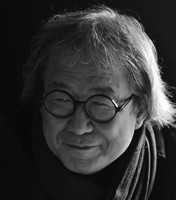
2017 Special Prize Laureate
H-Sang Seung
CV
- B.A. in Architecture, Seoul National University
- M.S. in Architecture, Seoul National University
- Representative Director, Institute of Space Research
- CEO, IROJE Architects & Planners
- Visiting Professor, North London University
- Honorary Fellow, American Institute of Architects
- Coordinator, Paju Book City
- Adjunct Professor, Korea National University of Arts
- Member, Management Committee, Seoul School of Architecture
- City Architect of Seoul Metropolitan Government
- Chairperson, Management Committee, Seoul Biennale of Architecture and Urbanism
- Distinguished Professor, Dong-A University
Reason for Award
Professor H-Sang Seung graduated from the Department of Architecture at Seoul National University and its graduate school, and studied at the Vienna University of Technology. For 15 years under the guidance of Kim Swoo-Geun, he designed works such as Masan Yangdeok Catholic Church and Kyungdong Church. From 1980 to 1982, he studied at the Vienna University of Technology in Austria, and after returning to Korea, he served as CEO of the Space Group of Korea from 1986 to 1989.
In 1989, he established his own architectural office, IROJE Architects & Planners (履露齋). In 1990, he became a member of the “4.3 Group,” a gathering of 14 young architects who created a fresh movement demanding new discourses in Korean architecture. In 1994, he also participated in the establishment of the Seoul School of Architecture, seeking new architectural education to cultivate “holistic and fundamental thinking” among architecture students.
In 1998, he served as a visiting professor at the University of North London (now London Metropolitan University), and taught at Seoul National University and the Korea National University of Arts. Since 2017, he has been a visiting professor at the Vienna University of Technology and a chair professor at Dong-A University. Starting from his critique of Western civilization that dominated the 20th century, he placed the theme of “the Aesthetics of Poverty” at the center of his architectural work, and has won numerous awards such as the Kim Swoo-Geun Cultural Award and the Korean Architecture Award.
In 1999, while directing the new town construction as the coordinator of Paju Book City, he was awarded the Honorary Fellowship of the American Institute of Architects (Honorary Fellow of AIA) in 2002. He also became the first architect to be selected as “Artist of the Year 2002” by the National Museum of Modern and Contemporary Art, Korea, which held the exhibition “Architect H-Sang Seung.” His architectural works have gained international recognition through solo and group exhibitions in the United States, Japan, Europe, and China, and are currently expanding across Asia, the United States, and Europe, including vigorous activities in China.
In 2007, the Korean government awarded him the “Korean Culture and Arts Award” in recognition of his contributions to Korean culture and the arts. He served as commissioner of the Korean Pavilion at the Venice Biennale in 2008, and as general director of the Gwangju Design Biennale in 2011. From 2014 to 2016, he served as the first Chief Architect of Seoul, restoring the city’s identity.
His publications include: The Aesthetics of Poverty (1996), The City of Wisdom, the Architecture of Wisdom (1999), Architecture, Signs of Thought (The Immortal Architecture of the 20th Century Encountered by H-Sang Seung) (2004), What is Architecture? (Reflections and Thoughts of Eleven Architects of Our Time) (2005), Fingerprint (Records of Nature and Life Engraved on the Earth, LANDSCRIPT) (2009), Paju Book City Culturescape (2010), The Tomb of Roh Moo-Hyun (A Landscape for the Self-Exiled) (2010), Story of 360 Degrees (Creating a Clubhouse by H-Sang Seung, Building a 360-Degree Public Golf Course) (2012), Old Things Are All Beautiful (2012), Set of Temporary Spaces (2012), Rediscovery of Seoul [co-authored] (Lectures on Urban Humanities, How Should a City Change for Citizens to Be Happy?) (2015), The Aesthetics of Poverty, 20th Anniversary Revised Edition (2016), Invisible Architecture, Moving City (Reflections on City and Architecture) (2016), and H-Sang Seung Document (2016).
Acceptance Speech
First of all, I would like to express my deepest gratitude to the Kyung Ahm Foundation for granting me this precious award. It is especially meaningful as the ceremony takes place in Busan, the city where I was born and spent my childhood. Furthermore, receiving an award created by the life of restraint and diligence of the late Chairman Geum-Jo Song, whom I deeply respected, presents me with a value far greater than the award itself. However, I cannot help but worry that my receiving this precious award might undermine its authority.
In particular, the fact that this award is given to an architect is nothing short of encouraging and moving, especially when considering the current reality of Korean architecture today. Architecture has long been distorted in many ways in this land, and as a result, the architectural landscape we see today is unfortunately quite shabby. Architecture is the oldest endeavor that began with the dawn of humanity and is a culture that has carried and conveyed our lives through generations. Even when architecture collapses and becomes ruins at the end of its life, it remains a repository of memory that allows us to revisit the spirit of the people and the times through the traces of life it once contained. That is why, although we build architecture, it is in turn architecture that builds us. As the German philosopher Heidegger once said, architecture is our very existence itself.
Nevertheless, architecture has often been reduced merely to real estate, valued only for its economic worth in past times, and in some cases treated as a disposable commodity, built hastily and demolished just as quickly. In pursuit of real estate value, people move from place to place without settling, living like nomads in the city. To borrow Heidegger’s words again, such people, unable to dwell, cannot truly exist, and thus cannot write poetry. Furthermore, our cities have often been shaped by those who used architecture as a tool to flaunt their social status and position, building larger and more extravagant than their surroundings. As a result, our urban landscape has generally been one of disharmony, neglecting the beauty of living together. Ironically, long ago—though we were poor—our way of life was truly beautiful. Architecture always considered others, shared with neighbors, and cities preserved for a long time a communal way of life in harmony with nature and with each other. Remembering this, one might say that today’s architecture has in some ways regressed compared to the past.
For this reason, I have consistently argued that the greatest value architecture must hold is publicness. Even if one builds with private funds, I have said that the individual only has the right to use the building, while ownership ultimately belongs to the citizens and to society. This is because the lives of surrounding people are inevitably deeply affected by that architecture. Since architecture can even have profound impacts on society, I have believed that it must conform to the public good. This is why I coined terms such as “the aesthetics of poverty” and “fingerprint,” to emphasize restraint and humility, sharing and coexistence, and I have consistently advocated these ideas through my architectural works as well as through lectures and writings.
However, this path has not been an easy one. Clients who commissioned my designs felt burdened by my claim that their buildings were not their own. The unfair architectural system dismissed my approach with cynicism, and even the majority of my fellow architects often turned away from the hardships required by true architecture. Thus, I had to remain outside their boundaries. Life outside the boundaries is cold, lonely, dark, and sometimes frightening. Yet, the cultural critic Edward Said, author of Orientalism, encourages us by saying that those who exile themselves into such solitude beyond the boundaries are the intellectuals who move society and the times a little further forward. Encouraged by his words, and marked by the stigma of being an outsider, I have continued to carefully shape my architecture from the margins. Could it be that this very attitude has now been recognized as valuable? At last, I have the honor of receiving the Kyung Ahm Prize.
Of course, I will not regard this award as a reward for my achievements. Many of the great works of architecture throughout history were created by architects in their late sixties and seventies, and I have just entered that age myself. Thus, I believe this award will serve as a clear turning point to temper and refine me further. I will devote the prize money entirely to that purpose. I have a small studio in a remote place. It has grown so old and dilapidated that it has become difficult to use, but I hesitated to repair it for lack of means. With this award, however, I will repair it, stay there, and begin my architecture anew. If I can do this, I believe there is no better way to use the prize money than in accordance with the intent with which it was given.
I am deeply and repeatedly grateful for this precious award.
I will live with sincerity and diligence.