



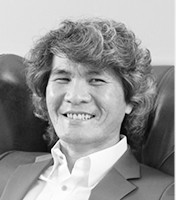
2016 Life Sciences Laureate
Changjoon Justin Lee
CV
- B.S. in Chemistry, University of Chicago
- M.S. in Neurophysiology, Columbia University
- Ph.D. in Neurophysiology, Columbia University
- Postdoctoral Fellow, Emory University
- Senior Researcher, Korea Institute of Science and Technology (KIST)
- Founder & Vice Director, WCI Center for Functional Connectomics
- Principal Investigator, Korea Institute of Science and Technology (KIST)
- Director, Neuroscience Research Group, KIST
- Director, Glia-Neuron Interaction Research Group, KIST
Reason for Award
Dr. Changjoon Lee is an outstanding neuroscientist who has made remarkable contributions to brain research. By moving beyond previous studies focused primarily on neurons, he has elucidated new functions of glial cells and the associated signaling mechanisms, achieving groundbreaking insights into memory function and the origins of brain disorders. Notably, his work interpreting and identifying the causes of intractable conditions such as memory loss and dementia from a glial cell perspective has laid the foundation for next-generation drug development, a contribution that has drawn global attention in the field of neuroscience.
Based on his exceptional research achievements in neuroscience and his contributions to humanity, Dr. Changjoon Lee has been selected as the recipient of the 12th Kyung Ahm Science Award in the Life Sciences category. His recent research, actively published in high-impact journals such as Nature and Cell, has attracted significant attention. For example, his 2010 study in Cancer Research, which demonstrated that caffeine suppresses cancer cell motility, not only shifted public perception of caffeine but also provided important implications for the development of therapeutic drugs for brain cancer.
In recognition of his outstanding accomplishments in neuroscience and their societal impact, Dr. Changjoon Lee is honored as the 12th Kyung Ahm Science Award laureate in Life Sciences.
Acceptance Speech
It is a great honor to receive the 12th Kyung Ahm Science Award. I would like to sincerely thank Chairman Song Geumjo, founder of the Kyung Ahm Educational Foundation, Academic Committee Chair Do-Yeon Kim, and all the members of the selection committee. I am also deeply grateful to President Bongkyun Kang of the Korean Society for Brain and Neural Science and all its members who recommended me.
I would like to acknowledge the significant foundational research that made my work possible. In 2010, Dr. Bo-Eun Yoon, as first author, published the first study on the mechanism of inhibitory neurotransmitter GABA release from astrocytes in Science. In 2012, Dr. Dongho Woo, as first author, elucidated the mechanism of excitatory neurotransmitter glutamate release from astrocytes in Cell. In 2014, Dr. Sunmi Cho, as first author, revealed for the first time in Nature Medicine that GABA from reactive astrocytes plays a decisive role in memory loss associated with dementia. Many of these first authors were students at the time; they have since earned their Ph.D.s and now serve as university professors and senior researchers. I am grateful to them and all co-authors who laid the groundwork for these studies. I also thank numerous collaborators who contributed to joint research.
I am particularly moved and grateful to the members of my laboratory—students, researchers, and postdoctoral fellows—who have devoted themselves tirelessly to brain research. Without their dedication, many of the creative ideas we pursued would have remained just concepts. I am also deeply grateful to my mentor and lab leader, Dr. Hee-Seop Shin, for his pivotal role in bringing me to KIST and helping me establish a successful laboratory. I extend my thanks to Dr. Byung-Kwon Lee, President of KIST, Dr. Tae-Hoon Lim, Vice President, and Dr. Dong-Jin Kim, Director of the KIST Brain Research Institute, for their generous support. Although they are no longer with us, I also wish to thank my parents, who nurtured my dream of becoming a scientist from an early age. Finally, I wish to express endless gratitude to my wife, Jaejin Lee, my lifelong partner and closest friend, for her unwavering support in difficult times, as well as my two sons, Haejin and Haejun, for growing up well despite my busy research schedule. Above all, I dedicate this honor to God, the Creator of heaven and earth, who has given me life and salvation.
KIST has been the central place for my career and the platform where I could pursue my dream in brain research. I first visited KIST through the introduction of Dr. Hee-Seop Shin, then Director of the Institute for Basic Science and the leading brain researcher at KIST. Upon the invitation of KIST President Yoo-Seung Kim, I joined as a Senior Researcher in September 2004. I am grateful to the leadership of KIST who generously supported research space, funding, and personnel. Later, through the KU-KIST Convergence Graduate School established in 2013, I was able to mentor outstanding students, and I am thankful to current Director Kwan-Young Lee. I also thank Director Gil-Joo Moon of the UST Graduate School of Science and Technology for providing excellent students.
After quickly establishing my laboratory at KIST, I began research focusing on non-neuronal cells in the brain. While the brain’s neurons have been extensively studied, the numerous non-neuronal cells, particularly astrocytes, had largely remained a mystery. My research revealed that astrocytes are not only abundant but also generate and release critical signaling molecules that profoundly influence brain function. Furthermore, these astrocytic functions can contribute to brain disorders, including dementia and Parkinson’s disease. Based on these foundational discoveries, we hope to develop more effective treatments for brain diseases.
Finally, I would like to reiterate my gratitude to everyone who has encouraged and supported me along this journey. I am grateful to my mentors, colleagues, collaborators, and students who have worked alongside me, as well as to my family for their unwavering support. Above all, I dedicate this award to God, the Creator, who has guided and sustained me throughout my life.