



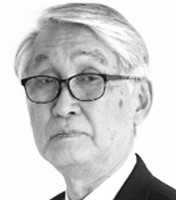
2015 Humanities and Social Sciences Laureate
U Chang Kim
CV
- B.A. in Political Science and English Language & Literature, Seoul National University
- M.A. in English Literature, Cornell University
- Ph.D. in Literature, Harvard University
- Lecturer, Department of English Language & Literature, Seoul National University
- Assistant Professor, Department of American Studies, State University of New York at Buffalo
- Professor / Professor Emeritus, College of Liberal Arts, Korea University
- Distinguished Professor, Ewha Womans University
- Member, National Academy of Arts, Republic of Korea
- Organizing Director, The 3rd Seoul International Literature Forum
Reason for Award
Professor U Chang Kim is an integrative humanities scholar whose work encompasses literature, philosophy, thought, art, aesthetics, and even contemporary social issues. Going beyond literature to the humanities, and beyond the humanities to society and humanity as a whole, he is recognized as one of Korea’s representative Renaissance-type scholars. Professor Kim has remained faithful to the scholarly virtues of fact-based inquiry, comprehensive understanding, openness to interaction, receptive sensibility, rigorous thinking, and precise use of language. As one literary critic has said, he is “one of the most creative assets that make up modern Korean culture.” For these reasons, he was deemed the most fitting recipient of the Humanities and Social Sciences category of the 11th Kyung Ahm Prize for Academic Excellence.
Professor Kim has delved deeply into how the inner self connects with and expands into the world and its environment, and how, in that process, human beings are reshaped by the world. His thinking is well reflected in the following words: “When one seeks to live one’s life in a truly meaningful way, one must follow the voice of conscience. Without a new personal reflection through inner selfhood, the ethics of society cannot be in a sound state.”
Professor Kim has remained faithful to the scholarly virtues of fact-based inquiry, comprehensive understanding, openness to interaction, receptive sensibility, rigorous thinking, and precise use of language. As one literary critic has said, he is “one of the most creative assets that make up modern Korean culture.” For these reasons, he was deemed the most fitting recipient of the Humanities and Social Sciences category of the 11th Kyung Ahm Prize for Academic Excellence.
Acceptance Speech
I would like to express my sincere gratitude for the decision to award me. I feel deeply honored, yet also somewhat humbled, as I consider myself someone who has not necessarily achieved deeds worthy of such a prize.
In today’s reality, both good and bad events are occurring explosively. Amidst this, there are also experiments in culture and architecture. I hope that these experiments will eventually lead to scholarship and culture that embrace greater harmony and creative leaps. At that point, works far surpassing my own writings—which could only capture fragmented impressions—will emerge as significant creative achievements.
Unlike real life, artistic activity and scholarly writing each possess their own spaces of thought and imagination in which they are carried out. Looking back on my own writings, I cannot help but consider their fragmented and scattered nature to be problematic. The character of the works I have written has been shaped by a combination of factors, including society, politics, and the cultural confusion our society has faced. I offer this as a self-defense for the nature of my writing.
In relation to the advancement of natural sciences, we often speak of paradigms and their shifts. Social and cultural thought, similarly, has paradigms and transitions. Observations of these phenomena are reflected in concepts such as the "climate of opinion," "cultural forms," "episteme," or the “meme” as an ideological factor that constitutes concepts or thought. These elements give rise to symbolic coherence within a culture. Our experience of modernity has often been one in which this cultural totality is disrupted.
Of course, this may serve as preparation for a new, larger cultural totality. Many things that occur before this totality is realized are necessarily fragmentary. Yet even when paradigms are unclear, there is merit in approaching given tasks gradually and microscopically rather than holistically. Ideological thinking tends to overemphasize the unity of social symbolic systems. In any case, an overly complete cultural totality may become a system of cognition—a “iron cage”—that conflicts with the realities of life. Truly meaningful culture is one that maintains its integrity through creative energy while simultaneously evolving.
Where the coherence of culture is disrupted, individual life cannot hold holistic meaning. Yet the work of restoring it is mediated through the lived experiences of individuals. Individuals are also bearers of creative forces that transcend the self. The life of an individual is both a temporal point and a pivot from which existence unfolds.
Even if meaningful relationships between people and the world are formed through symbolic systems and the symbols within them, these relationships are grounded in individual life—life composed of perception, emotion, and thought. All systems are ultimately validated through this point. Literature, I believe, captures life at precisely this juncture. I have jokingly referred to novelists as field investigators for sociology. Novels unfold the stories of individual lives, which then assume structured meaning within the narrative. Social science, in turn, reconstructs these aesthetic and inner structures into larger, external frameworks.
While human life can be typified by social or scientific frameworks, truly individual life carries experiential content beyond such typifications. In this regard, poetry is perhaps more directly open to individual experience. Sensation and emotion arise as direct responses to the realities of life, and few poems do not engage with such material. At the same time, poetry is open to forms that transcend individual life. Its engagement with formal elements and the aesthetics of language is closely related to this function. Poetry arises from perception and sensation, and it sublimates these into expressive form.
My literary writing began largely outside my specialized academic field, primarily in literary criticism, particularly of poetry. Criticism is writing about literary works, and often, these critiques were commissioned by journals, which partly explains the fragmentary nature of my writings. Yet when one writes criticism on a work—whether poetry or prose—it must be logically and cohesively articulated. Poetry has its own system of emotion, form, and rhythm. Stories have their own structures of beginning, development, and conclusion. One function of literary criticism is to elucidate these narrative structures.
In his book Morphology of the Folktale, Russian scholar Vladimir Propp identifies five constituent elements of folktales, 31 functional elements related to narrative development, and seven or eight limited plot types. These observations are largely applicable to other narrative genres. Another way to analyze narratives is ideologically, identifying central concepts such as nation, democracy, class, inequality, social justice, development, and history, or elements like imperialism, racism, capitalism, socialism, and gender discrimination.
However, if the significance of a literary work is reduced to ideological explanation, its enjoyment evaporates. Literary criticism does not reduce a work to social or formal structures. Even in such analysis, careful tracing of narrative flow reveals twists, turns, and nuances. The trajectory of human life, if simplified, is deceptively straightforward: birth, aging, illness, and death. Yet individual lives differ immensely. Each individual is unique, and this uniqueness cannot be otherwise explained.
Not specifically about literature, but recently, American activist Gloria Steinem visited North Korea with over thirty other women and returned via the DMZ. An anecdote from the New Yorker—related to her forthcoming autobiography—illustrates a point. In her first-year geology class, she saw a turtle on an asphalt path and, intending to save it, pushed it into the river. Her instructor remarked that the turtle would take several more months to lay eggs. For Steinem, this incident became a life lesson: when engaging socially, “Speak from the experience you have lived. That is your expertise.” Literature is human activity attempting to articulate such human stories, referencing events like the turtle.
Why do we empathize with individuals and respond to their truths? Humans possess empathy, mediated directly by “mirror neurons,” which facilitate understanding others. Expanding this, human intelligence has the capacity to correspond with all things. Our generalizations are not mere deductions; they assume alignment of mind and existence. Mathematician Roger Penrose described his mathematical intuition as largely visual, often easiest to express graphically rather than in formulas. Similarly, poetic intuition partially aligns perception of concrete objects with universal existential insight.
Finally, a fantastical story concludes this reflection. Recently, I examined sculptures by Kim Chong-Yeong, an artist excelling in poetry, calligraphy, and painting. His calligraphy includes a story from the Samguk Yusa: The Tang Emperor excavated a pond, and under the moonlight, a rock shaped like a lion and a flowered mountain appeared in the reflection. He had an envoy locate the mountain, and upon returning to Tang, verified that his shoes placed on the mountain were reflected exactly in the pond. This story also appears in poetry by Seo Jeong-ju. Its allure lies in illustrating how human perception aligns with the vastness of nature.
What matters is translating such intuition into theory. Theory addresses intellectual demands and informs policy. While many attempts exist to explain reality holistically, they often carry ideological biases. Yet these efforts provide stepping stones toward true cultural totality. Empirical reality serves as a testing ground for these ideas. The mind is like a Petri dish, where the truths of individual existence and universal harmony are examined.
In today’s world, events—both positive and negative—occur explosively. Within this, cultural and architectural experiments emerge. I hope that from these experiments, scholarship and culture will achieve greater harmony and creative leaps, producing major creative works that transcend my own writings, which could only capture fragmented impressions.