



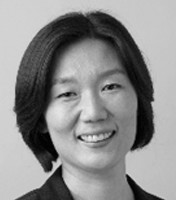
2015 Life Sciences Laureate
Sung Hee Baek
CV
- B.S. in Molecular Biology and Food & Nutrition, Seoul National University
- M.S. in Molecular Biology, Seoul National University
- Ph.D. in Molecular Biology, Seoul National University
- Postdoctoral Fellow and Research Professor, University of California, San Diego
- Assistant / Associate Professor, Department of Life Sciences, Seoul National University
- Director, Creative Research Initiative, Ministry of Education, Science and Technology
- Mid-Career Chair Professor, Seoul National University
- Professor, Department of Life Sciences, Seoul National University
Reason for Award
Professor Sung Hee Baek has made groundbreaking contributions to understanding the mechanisms of cancer development and metastasis by discovering new tumor suppressors and elucidating their functions. In 2002, Professor Baek gained attention by publishing two papers in the world-renowned journal Cell on the regulation of cell signaling pathways by transcription factors.
Since 2010, Professor Baek has intensively published papers on the methylation of chromatin remodeling factors related to cancer metastasis. Her recent paper published in Molecular Cell was selected as a cover article, as it elucidated the functions of orphan nuclear receptors in suppressing colorectal cancer, the stabilization of the tumor suppressor p53 by orphan nuclear receptors, and their apoptotic effects.
Furthermore, four cover articles in Molecular Cell on orphan nuclear receptors and cancer development, as well as a comprehensive review article in Annual Review of Physiology, have suggested new directions in cancer research.
In addition, her 2015 study on Pontin proteins published in Nature Communications provided momentum for new research in the field of stem cells.
Professor Baek’s recent research, using genetically deficient mouse models of chromatin remodeling factors involved in inflammatory responses, has contributed in multiple areas, including genetics, epigenetics, physiology and biochemistry, and molecular biology. In light of these achievements, she is expected to grow into a leading global scientist.
Acceptance Speech
First, I would like to express my sincere gratitude for awarding me this prestigious honor. I am deeply thankful to Chairman Song Geum-Jo, who founded the Kyung Ahm Education & Culture Foundation, and to Executive Director Jin Ae-Un, who has been leading the foundation with great dedication. I am also grateful to those who recommended me and to the selection committee. Personally, the Kyung Ahm Academic Award has been the award I most wished to receive, which makes this recognition particularly meaningful to me. Receiving it at this stage of my 12-year academic career, as I am seeking a turning point in my research, feels like a strong encouragement to take the next step forward.
I consider myself extremely fortunate. My life partner and fellow researcher, Professor Kim Geun-Il at Sookmyung Women’s University, our two daughters, Jae-In and Hye-In, my supportive parents, my mentor Professor Jeong Jin-Ha, and my senior colleagues who previously received the Kyung Ahm Academic Award—Professors Kang Bong-Gyun, Jeong Jong-Kyung, and Lee Won-Jae—have all inspired me, motivating me to pursue the award and join their “Kyung Ahm Quartet.” I am also grateful to Dean Hwang Deok-Soo, Associate Dean Lee Geon-Soo, Professors Choi Hee-Jung, Kim Jin-Hong, and Hwang Sung-Soon, and many other remarkable colleagues who traveled to Busan to celebrate this occasion. Finally, I owe thanks to my proud and hardworking lab students, whose dedication and talent make my work both rewarding and enjoyable.
I would like to take this opportunity to express my gratitude once more for this honor. I will continue to strive for excellence in research, aiming to take the next leap forward, while always upholding the pride and responsibility of being a Kyung Ahm Academic Award recipient.
Throughout my academic career, I have often been asked about the challenges of being a female scientist. However, I believe there are more advantages than difficulties. Research is inherently collaborative, requiring networking and cooperation with many people, and here, the communication and empathy skills often associated with women are highly valuable. I advise younger female scientists to focus on developing their strengths rather than worrying about potential disadvantages. Support and encouragement are crucial, particularly for talented women at the early stages of their research careers. Many capable female students, without adequate support for balancing marriage, childbirth, and parenting, are forced to put aside their research aspirations. In my case, I was fortunate to have the full support of my parents in raising my children, which allowed me to focus entirely on research and actively participate in international conferences—an essential factor in enabling me to perform research at a global level. I sincerely thank my parents for their unwavering support.
One of my favorite sayings is, "Luck is when preparation meets opportunity." I shared this with new students during the 2012 Seoul National University entrance ceremony. In life, everyone has at least three opportunities, and preparation is essential to seize them. Meeting Professor Jeong Jin-Ha, who guided me toward a research career, meeting my husband in his lab, returning to my alma mater as a faculty member, and collaborating with brilliant colleagues and talented students—these were all opportunities I could not afford to miss, and I was fortunate to grasp them.
Looking ahead, I am thinking about the opportunities I still need to seize. As a scientist, I aspire to make significant discoveries that leave a lasting mark in the history of science and contribute to human health and happiness. In the United States, the Lasker Award is often seen as a stepping stone to the Nobel Prize, and many Lasker recipients have gone on to receive the Nobel. I hope that the Kyung Ahm Academic Award will similarly serve as a predictor for future Nobel laureates in Korea.
Once again, I consider myself extremely fortunate. My life partner and fellow researcher, Professor Kim Geun-Il, our two daughters, Jae-In and Hye-In, my supportive parents, my mentor Professor Jeong Jin-Ha, my inspiring senior colleagues, and my outstanding students have all contributed to my happiness and success. I am deeply grateful for this honor and will continue to pursue excellent research, taking pride in the Kyung Ahm Academic Award and striving to uphold its legacy.