



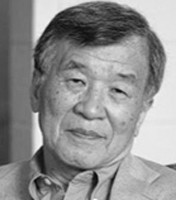
2014 Humanities and Social Sciences Laureate
The late Jae Gwon Kim
CV
- Studied French Literature at Seoul National University (did not complete degree)
- B.A. in French, Mathematics, and Philosophy, Dartmouth College
- Ph.D. in Philosophy, Princeton University
- Professor, Brown University
- Distinguished Professor, University of Michigan
- Professor, Cornell University
- Professor, Johns Hopkins University
- William H. P. Faunce Professor of Philosophy, Brown University
- Fellow, American Academy of Arts and Sciences
- President, American Philosophical Association, Central Division
Reason for Award
Professor Jae Gwon Kim is one of the most proud and distinguished philosophers that Korea has produced. After obtaining his Ph.D. in Philosophy from Princeton University, Professor Kim held faculty positions at Johns Hopkins University and the University of Michigan in the United States, and since 1987, he has been serving as the William Herbert Faunce Professor at Brown University.
Early in his career, Professor Kim analyzed the concepts of event and supervenience, establishing them as central concepts in contemporary philosophy and proposing standard theories for them. Through this work, he pioneered new approaches to understanding the relationship between mind and matter, securing his position as a leading scholar in the fields of contemporary metaphysics and philosophy of mind.
Professor Kim’s research has been recognized as having made a decisive contribution to establishing the theoretical foundations of non-reductive physicalism, which dominated the relevant scholarly community in the latter half of the 20th century. However, he went a step further by revealing the theoretical weaknesses of non-reductive physicalism and reasserting the possibility of reductive physicalism, thereby once again reshaping the landscape of the global philosophy of mind.
This philosophical journey of Professor Kim can be regarded as a most impressive representation of the global scholarly effort to explore the human mind, based on the achievements of cognitive science and neuroscience accumulated in the latter half of the 20th century.
Such recognition is further evidenced by the fact that 11 world-renowned philosophers participated in the 2015 publication of a collected volume honoring Professor Kim’s achievements. In addition, many of the philosophers whom Professor Kim has taught, both domestically and internationally, are actively engaged in research in the global philosophical community, suggesting that his achievements will continue to exert significant influence on the future of philosophy.
Considering these points, awarding Professor Kim the 10th Kyung Ahm Academic Award is judged to be most consistent with the purpose of this academic prize.
Acceptance Speech
The fact that this award ceremony is held in Busan is deeply meaningful to me. I was born in Daegu more than 80 years ago and grew up there until I entered university. The very place where I took the entrance exam for Seoul National University was Busan. At that time, the Korean War (1950–1953) was ongoing, and the war continued even after I began university. I spent my first semester in a temporary classroom resembling a barrack on a hillside northwest of Busan. The classroom had no flooring, leaving bare earth underfoot, and it was common for professors to fail to appear without any notice. In fact, the term “class canceled” originated from situations like these.
Today, few people here may have any memory of the Korean War. Yet, the experiences of that war remain a part of my identity even to this day. I cannot think of Daegu without recalling the long days when it was surrounded by the North Korean army, and I cannot think of Busan without remembering the vivid images of classes in those wooden barracks. These are not unpleasant memories. On the contrary, young people at the time were full of hope and ambition. We looked forward to our open future and believed in a better life. Instead of succumbing to fear and frustration, we maintained a positive and optimistic attitude toward the future.
These experiences also motivated me to pursue my studies in the United States. After two years at Seoul National University, I transferred to Dartmouth College in New Hampshire to continue my education. Initially, I studied French Literature as I had in Korea, but after one year, I switched to philosophy, believing that it would serve as a better guide to understanding the world and truth. After completing my undergraduate studies at Dartmouth, I entered Princeton University for graduate school and have since taught and conducted research at several universities in the northeastern United States.
My primary areas of research in philosophy have been metaphysics and philosophy of mind. As you may know, metaphysics asks fundamental questions about the general nature of the world we inhabit: What is our nature, and how are we connected to other entities in this world? Is the world fundamentally physical, or does it include essentially non-physical entities, such as the human mind or soul, as our ancestors believed? Are our thoughts, desires, beliefs, and hopes merely the electrical activities of our brains, or is there something essentially non-physical that constitutes a human being?
Scientific progress, especially in cognitive neuroscience, indicates that conscious states such as pain or perception arise from—or are correlated with—specific neural states. Yet, we do not fully understand why these particular correlations exist. More than a century ago, William James, the founder of modern psychology, wrote: “According to the principles of this book, our thoughts and other mental activities accompany and are based upon brain activity. All such relationships can be empirically observed. But we have no understanding, not even faintly, of why these relationships exist. Indeed, why the brain produces consciousness itself remains a mystery.” Even now, more than a hundred years later, we remain largely at the stage of compiling lists of correlations between mental phenomena and neural substrates, without comprehending why these specific correlations arise rather than others.
Some might argue that consciousness is nothing more than a state of the brain. Others may claim more plainly that consciousness is the state of a subject or experiencer—“my” or “your” state, that is, the human state. Yet this raises deeper questions: Who am I? What am I? These questions, famously posed by Descartes, form the starting point of philosophy of mind, probing human nature and identity. As Descartes stated, I know that I exist. But what am I? What kind of being am I? What is my nature? According to Descartes, a human is composed of both body and mind, thus possessing a dual nature. Another interpretation holds that only the mind, or soul, constitutes the true self, while the body is merely a temporary vessel. Meanwhile, contemporary physicalist perspectives claim that I am simply my body, more precisely my brain, and nothing else constitutes me. The debates among these views continue vigorously to this day.
Thus, two fundamental questions underlie philosophy of mind. First, why are our mental states correlated with brain states? Why does consciousness arise from the brain? Second, what kind of being am I? Am I identical with my mind or soul? Am I the composite of body and mind, or am I merely my body, that is, my brain? We may never find definitive answers, or such answers may exist beyond the limits of human understanding. Nonetheless, these are the questions I have pursued and contemplated over the past fifty years.
Finally, I wish to express my deep gratitude and respect for the mission of the Kyung Ahm Educational Foundation and the noble vision of its founder, Mr. Kyung Ahm Song Geumjo. The foundation’s efforts will make a substantial contribution to the advancement of scholarship in Korea and to the development of global academia and culture.