



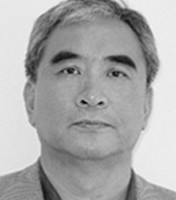
2013 Humanities and Social Sciences Laureate
Young hoon Rhee
CV
B.A. in Economics, Seoul National University
M.A. in Economics, Seoul National University
Ph.D. in Economics, Seoul National University
Assistant Professor, Department of Economics, Hanshin University
Associate Professor / Professor, Department of Economics, Sungkyunkwan University
Professor, Department of Economics, Seoul National University
President, Korean Society of Old Documents
President, Korean Economic History Society
Chairman, Nakseongdae Institute of Economic Research
Reason for Award
Professor Young-hoon Rhee is an outstanding scholar who, by applying the methodology of quantitative economics to Korean economic history, has achieved singular accomplishments in long-term quantitative economic history that Korean historiography had not produced. By unearthing a wide variety of primary sources, he has made possible a higher leap forward not only in economic history research but also in Korean historical studies more broadly. The selection committee for the Kyung Ahm Prize in the Humanities and Social Sciences makes it clear that Professor Lee was chosen as the recipient above all in consideration of his exceptional scholarly achievements.
Professor Young-hoon Rhee also formed a school of scholarly companions and, by building a database from an extraordinarily vast trove of sources—including land registers and household registers—provided great assistance to researchers.
Furthermore, by introducing his research to the international academic community, he has greatly contributed to the global understanding of East Asian economic history in the eighteenth and nineteenth centuries. His research extends to many other fields as well, and these days he is devoting keen interest to the contemporary history of the Republic of Korea. As noted above, this interest appears to have arisen naturally in the course of pursuing how the legacy of the premodern era connects with the present.
That is, unlike the traditional society up to the nineteenth century, the twentieth century was a civilizational turning point in which modern civilization, originating in the West, was transplanted and took root. The essence of modern civilization is the establishment of the individual as the subject of private rights, and Professor Rhee seeks to locate the early formation of such an individual in the Joseon dynasty of the fifteenth to nineteenth centuries.
Professor Young-hoon Rhee has reminded scholars of the gravity of primary sources in historical research. It is true that there have been a number of critical views of his research results, but he has answered only with sources and facts. His research has indeed opened a new horizon in the study of Korean history. The selection committee for the Kyung Ahm Prize in the Humanities and Social Sciences makes it clear that Professor Rhee was chosen as the recipient above all in consideration of his exceptional scholarly achievements.
Acceptance Speech
As a researcher of Korean economic history, my past thirty-five years have been a continuous series of excitement at discovering new sources, the thrill of encountering them, and the shock they brought. In 1983, at the Kyujanggak Archives of Seoul National University, I discovered that in the land registers yang an of seven counties in Chungcheongnam-do, compiled in 1898, roughly one-third of the farm households carried the notation “hyeopho” (“cooperating households”). These were the lower classes—slaves, hired hands, resident servants, and tenant laborers. A few days later, to collect the memories of local residents about these “hyeopho,” I embarked alone on my first field research trip.
Compared to that, the contributions of humanities and social science scholars like myself are often insignificant, or in many cases have only fostered confusion and hypocrisy. For such reasons, whatever the justification, an academic award is something I feel hardly able to bear. Nonetheless, I will take to heart the generous intention bestowed upon me, and I promise to do my utmost to synthesize and organize my remaining tasks, with the mindset of adding even a single stone to the development of our society and culture. I wish the Kyung Ahm Education & Cultural Foundation boundless prosperity. I would also like to express my gratitude to all the distinguished guests who have traveled from near and far to attend this occasion and listen to my inadequate words of acceptance.
In 1986, I had the great fortune to study under the late Professor Lee Soo-gun, researching the slaves of yangban households in the fifteenth and sixteenth centuries. While mapping the villages of approximately 3,300 slaves appearing in inheritance documents from yangban families in the Gyeongbuk region onto 1:50,000 maps, I would sometimes find myself suddenly setting off toward Andong or Bonghwa, walking endlessly along country roads. From 1987 onward, historical documents preserved by yangban families in various regions began to be actively published in collected volumes. When the Korean Society of Old Documents was founded in 1991, I enthusiastically participated as a founding member. Those were years buoyed by the excitement of encountering new materials.
In 1997, from the old documents of the Shin family of Yeonggwang, the Moon family of Yeongam, and the Yoon family of Haenam in Jeollanam-do, I discovered long-term time series beginning in the late seventeenth century for rice prices, wages, interest rates, and rent per durak of farmland. This was another major turning point in my life as both an economist and a researcher of Korean economic history. In 1998, I obtained the diary of the Park family of Yongmun-myeon, Yecheon, Gyeongbuk, written over four generations since 1830. The diary recorded in meticulous detail the household’s income and expenditure—a source I had once dreamt of encountering, now materialized before my eyes. The collaborative research that began with this led to the publication of The Farmers of Majil in 2001 and Re-examining the Late Joseon Period through Quantitative Economic History in 2004.
Each time I encountered a new source, my heart was stirred. New sources told me what was history and what was illusion. My past thirty-five years have been a continuum of criticism and debate. I have sparked many debates and have continually been a target of criticism. I have criticized the theories of capitalism’s embryonic growth and the Gwangmu Reform, and have denied the prevailing view that the Government-General of Korea indiscriminately expropriated farmland during the Land Survey Project. I have engaged in productive debate with Professor James Palais of the United States, who characterized the Joseon dynasty as a slave society, and sought to rewrite the history of land tenure systems in Goryeo and Joseon through a reinterpretation of tenant farmers. My research on the thousand-year history of slaves, households, land, and markets up to the nineteenth century has naturally led to shaping a particular image of twentieth-century Korean history.
For the past ten years, I have also begun to speak on the history of the Republic of Korea. The Republic of Korea is a nation founded on the individual as the basic unit of private autonomy and on “freedom” as its fundamental ideal. In this respect, its establishment signifies a “civilizational transformation” distinct from traditions up to the nineteenth century. This claim, too, has caused considerable stir in the humanities and social sciences.
I believe that my excessive curiosity for new sources has led me to take on too many projects. The thought that not much time remains for truly creative writing makes me anxious. My scholarship is still far from complete. Moreover, my heated debates have, unintentionally, caused disappointment to many people. For these reasons, I have never been moved by the expectation of receiving an academic award.
A few months ago, a professor with whom I have long maintained academic exchange requested a list of my research achievements. I guessed that he intended to recommend me for some museum committee. Some time later, I learned that he had instead recommended me as a candidate for the Kyung Ahm Prize. That alone was enough, and I was deeply moved, feeling as though I had already received a great award. Yet now I have been granted the actual honor of receiving it. I extend my deepest gratitude to the professor who recommended me and to all of you.
Through this occasion, I have learned in detail what kind of institution the Kyung Ahm Education & Cultural Foundation is, and what kind of person its founder, Chairman Song Geum-jo, was. Modern Korea has been built by creative entrepreneurs. Chairman Song devoted his life to creative business management, contributing to the development of the national economy, and donated a considerable portion of the wealth he had accumulated through thrift and diligence to public causes in education and culture. We do not despair of history because there are people like Chairman Song in our society.
Compared to such contributions, those of humanities and social science scholars like myself are often insignificant, or in many cases have only fostered confusion and hypocrisy. For such reasons, whatever the justification, an academic award is something I feel hardly able to bear. Nonetheless, I will take to heart the generous intention bestowed upon me, and I promise to do my utmost to synthesize and organize my remaining tasks, with the mindset of adding even a single stone to the development of our society and culture. I wish the Kyung Ahm Education & Cultural Foundation boundless prosperity. I would also like to express my gratitude to all the distinguished guests who have traveled from near and far to attend this occasion and listen to my inadequate words of acceptance.