



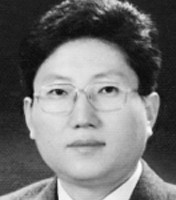
2013 Life Sciences Laureate
Min Goo Lee
CV
- Yonsei University, M.D.
- Yonsei University, M.S. in Pharmacology
- Yonsei University, Ph.D. in Pharmacology
- Research Fellow, University of Texas Southwestern Medical Center (UTSW), Dallas, TX
- Assistant Professor, Department of Pharmacology, Yonsei University College of Medicine
- Associate Professor, Department of Pharmacology, Yonsei University College of Medicine
- Professor & Chair, Department of Pharmacology, Yonsei University College of Medicine
- Director, Center for Drug Transport and Genomics, Yonsei University
- Evyson Distinguished Professor, Yonsei University
- Full Member, Korean Academy of Science and Technology (KAST)
- Principal Investigator, Creative Research Program on Molecular Regulation of Membrane Transport
Reason for Award
Living organisms, including humans, require continuous movement of substances to maintain life and ensure the proper functioning of each organ. Most of this movement is mediated by transport proteins present in the cell membrane. Professor Min Goo Lee is an internationally recognized leading researcher in the field of membrane transport, having dedicated his career exclusively to this area. He has published more than 110 scholarly articles and books in both domestic and international journals, including Cell and Nature.
In light of the excellence of Professor Lee’s recent research achievements, he is recognized as a scientist at the peak of his academic career, and even more active research accomplishments are anticipated in the future. He recently discovered previously unknown intracellular protein trafficking pathways, demonstrating that activating these pathways can deliver genetically defective proteins to the cell membrane, thereby providing potential treatments for related diseases.
In studies on mutant transport proteins that cause fatal genetic disorders such as pancreatitis and pulmonary disease (cystic fibrosis), he identified the mechanisms by which mutant proteins induce disease under cellular stress conditions and discovered new membrane trafficking pathways that can overcome these mechanisms. This research was published in the world-renowned journal Cell in 2011 and has spurred the development of drugs that activate non-conventional trafficking pathways under stress, representing a breakthrough that provides a potential treatment avenue for cystic fibrosis, a currently intractable pulmonary disease.
Professor Lee also conducted research on PDZ scaffold proteins that regulate the function of membrane transporters and ion channels. Using a knockout mouse model of one transporter, Shank2, he demonstrated that the Shank2 gene is associated with autism, a currently untreatable disorder. This achievement was published in the prestigious journal Nature in 2012 and represents a significant step toward addressing social deficits in patients with autism.
Considering the excellence of Professor Lee’s recent research, he is recognized as a scientist at the highest academic level, and further outstanding research contributions are highly anticipated.
Acceptance Speech
First, I would like to express my gratitude to Chairman Geum-Jo Song, Executive Director Jin Aeon, Chairman Jang-Moo, and all the members of the selection committee for creating this prestigious opportunity for me. About a month ago, on a weekend evening while having dinner with my wife, I received a phone call from the committee chair informing me of the award, and the joy of that moment is still vivid in my memory. Being selected as this year’s recipient in the Life Sciences category, despite my relative lack of experience and seniority compared to other awardees, seems to me a message of encouragement to do even better in the future.
I feel deeply grateful that many people have valued my work even more highly than I might have expected, and it feels as though you have lifted me up so that I can succeed. There are several people I would especially like to thank for helping me achieve the small successes I have attained so far. First, my parents, who always wished for me to live honorably and urged me to follow the right path. I am sure my late father, who passed away a few years ago, would have been truly delighted to see me here today.
Second, I am grateful to the many mentors I have had throughout my life, particularly my final advisor, Dr. Kyung-Hwan Kim, who supervised my doctoral studies. Even after I was appointed at Yonsei University, he provided me with the conditions to pursue research freely and generously offered me everything he had.
Third, I wish to thank my wife, who has stood by my side faithfully for more than twenty years. During our time abroad, she endured hardships with me, such as moving to find affordable housing, and she was a candid companion who would firmly advise me whenever I considered taking an easier path that was not the right one.
Finally, I would like to extend my gratitude to Dean Ju-Heon Yoon of Yonsei University College of Medicine and the faculty members of the Department of Pharmacology, who were even more delighted than I was upon hearing the news of this Kyung Ahm Award. I am also thankful to the members of my research group who have supported me and shared both the struggles and successes that have brought me to where I am today.