



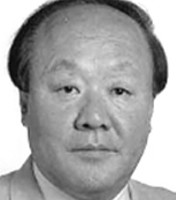
2013 Special Prize Laureate
The late Dae Joong Kim
CV
- B.A., Department of Public Administration, Seoul National University
- Studied at St. Antony's College, University of Oxford
- Head of Foreign, Social, and Political Departments, Chosun Ilbo
- Washington Correspondent, Director of Publishing Bureau, Chief Editorial Writer, Editor-in-Chief, Publisher, Chosun Ilbo
- Director, Chosun Ilbo Research Center for Contemporary History and Editorial Writer
- Special Member, Institute of Commonwealth Studies, University of Oxford
- Vice President, Korea Newspaper Editors’ Association
- Senior Advisor, Chosun Ilbo
Reason for Award
Dae Joong Kim, Advisor of the Chosun Ilbo, joined the company in 1965 and has devoted his entire career solely to journalism, serving as reporter, Washington correspondent, head of the Social Affairs Department, head of the Political Affairs Department, and Chief Editor. He is regarded as one of the greatest journalists of his time.
In 1992, Sisa Journal conducted Korea’s first-ever survey targeting a group of experts, in which Advisor Kim was selected as the “Most Influential Journalist.” He retained this top position without interruption until 2004. In other words, he was considered the “Representative Journalist of the Republic of Korea.”
In particular, columnist Dae Joong Kim’s standing has been very high, and his <Dae Joong Kim Column> in the Chosun Ilbo has long been deeply loved by readers. As a journalist and a commentator, Advisor Kim has been a journalist who defined an era. Even now, through his regular columns, he continues to meet millions of readers on a regular basis as an eternal active writer.
For nearly half a century, Advisor Kim’s courage and dedication—devoting himself solely to writing with integrity in the mission of “raising, protecting, and changing” the Republic of Korea—deserve to be remembered longer and commemorated more widely. Always prioritizing the reality of the nation and standing with the people rather than with power throughout his life, Advisor Kim is truly a proud newspaperman of Korea, a “newspaper craftsman” (匠人).
Dae Joong Kim has so far published four collections of columns: The Four Seasons of Washington (1982), An Era of Unfreedom (1986), Press, Be Careful (1994), and The Straightforward Writing of Editor Dae Joong Kim (2001).
In addition, he has received several awards in recognition of his contributions to journalism. These include the Wiam (Jang Ji-Yeon) Journalism Award (1991), the JoongAng Journalism and Culture Award (1994), the Unkyung Award (1996), and the Hyoryeong Award (1999). Furthermore, he was the recipient of the 1st Seoul National University Journalist Grand Prize (2004) awarded by the Gwanak Journalists’ Association and the 13th Proud Seoul Law Alumnus Award (2005) awarded by the Seoul National University College of Law Alumni Association.
Acceptance Speech
When I was first informed that I would be receiving this award, I hesitated for a while. There were two reasons for my hesitation. First, I felt that I was not a person suitable for the original purpose of this award. As its name indicates, this is an academic award. I am not a scholar; I am merely a newspaper journalist. This award was created to honor scholars who have devoted themselves to research in Korea’s challenging academic environment and to bring a fresh breeze to that landscape. I felt it presumptuous for me to receive it.
Newspapers must survive—not for the sake of newspapers or those who work in the newspaper industry, but to preserve the value of the written word for the rational and intellectual continuity of this nation. Moreover, this is necessary to derive the added value of “opinion.” I firmly believe that when newspapers take the lead in promoting reading, the dissemination of academic work will be further invigorated. I am truly grateful to all of you for bestowing this honor upon me.
Ultimately, I accepted the award. I decided to follow the wishes of Mr. Song Geum-jo, the founder of the Kyung Ahm Educational and Cultural Foundation. The first person to convey Mr. Song’s thoughts to me was a mid-level reporter at the Chosun Ilbo, where I work. This reporter, who had come to know Mr. Song while covering stories about him, conveyed the founder’s strong desire for me to receive this award. I was also informed that the “Special Award” is not part of the original composition of the Kyung Ahm Award but rather an additional feature, designed to introduce a unique element into the strictly academic atmosphere, serving as a supporting role to the academic award. Therefore, I came here today quietly, considering myself a supporting figure to the other recipients who have diligently devoted themselves to scholarship.
This year marks 48 years since I became a newspaper journalist. I have spent my life writing newspaper articles, which I humbly describe as “words.” I have strived to communicate and connect with the world, sensing what enrages and moves us, and what nurtures our growth. In the process, I occasionally came into conflict with political powers, experiencing what I call “exile-like study” twice. Having witnessed nine presidents, from Park Chung-hee to Park Geun-hye, I faced temptations and inducements to step outside journalism, yet I have managed to remain a so-called “dedicated journalist.” I have no regrets. Perhaps it is my unwavering commitment to journalism that is the reason you have chosen to honor me today.
I would also like to take this opportunity to say a few words about the current environment for Korean journalism. As is true worldwide, printed media in Korea faces a serious crisis. In the flood of electronic media, which delivers everything instantly and in meticulous detail, traditional newspapers and similar print media struggle to maintain their place. Globally, major newspapers in the United States have already been sold, and the advertising market has contracted. Soon, a similar contraction of print media may become evident in Korea. In this environment, people are less inclined to read, and longer texts are increasingly avoided. Overall, the reading of print media, including newspapers and books, ranks among the lowest in OECD countries.
Newspapers must survive—not for the sake of newspapers or the newspaper industry, but to preserve the value of the written word for the rational and intellectual continuity of this nation. Moreover, this is necessary to derive the added value of “opinion.” I firmly believe that when newspapers take the lead in promoting reading, the dissemination of academic work will be further invigorated. I am sincerely grateful once again to all of you for granting me this honor.