


2012 Humanities and Social Sciences Laureate
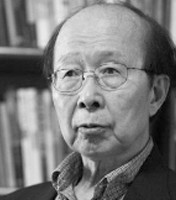
The late Chong Sik Lee
CV
- B.A., University of California, Los Angeles
- M.A., University of California, Los Angeles
- Ph.D., University of California, Berkeley
- Instructor, University of Colorado
- Instructor, Dartmouth College
- Professor, University of Pennsylvania
- Director, Anspach Institute on Diplomacy and Foreign Affairs, University of Pennsylvania
- Chairman, Graduate Program in International Relations, University of Pennsylvania
- Yongjae Distinguished Professor, Yonsei University
- Seokhak Professor, Kyung Hee University
Reason for Award
Professor Chong Sik Lee, after earning his Ph.D. in Political Science from the University of California, Berkeley in 1961, served for 38 years as a professor in the Department of Political Science at the University of Pennsylvania. Through his outstanding research achievements, he is internationally recognized as a leading scholar in the study of modern Korean politics.
Professor Lee served as the Yongjae Distinguished Professor at Yonsei University from 2000 to 2001 and has been serving as the Seok Scholar Professor at Kyung Hee University since 2003, actively mentoring younger generations while continuing his prolific writing activities. Over the past ten years, he has published ten books, including Seo Jae-pil, Reformist and Independence Activist of Late Joseon, and in 2012, he published two more works, Park Chung Hee: From Poverty to Power and Revisiting Post-Liberation History in the 21st Century, demonstrating unparalleled research excellence.
First, Professor Lee has made decisive contributions to understanding the historical foundations of North Korean politics. In particular, the book Communism in Korea, co-authored with Professor Robert A. Scalapino in 1973, was awarded the Woodrow Wilson Award by the American Political Science Association, making him the only East Asian political scientist to receive this honor.
Second, over the past half-century, he has conducted empirical research elucidating the historical foundations of modern Korean politics, establishing himself as a leading authority in the field. Beginning with his doctoral dissertation, The Politics of Korean Nationalism, he has devoted his life to studying the history of the Korean communist movement, the division of the Korean peninsula, the origins of the Republic of Korea, and central figures in modern Korean history, including Syngman Rhee, Seo Jae-pil, Lyuh Woon-hyung, Kim Kyu-sik, and Park Chung Hee, leaving a profound impact on the global political science community.
Third, he has emphasized the importance of understanding the international environment surrounding the Korean Peninsula in the study of Korean politics, producing outstanding books and articles on Korea-Japan relations, the history of the Chinese communist movement in Manchuria, and East Asian international relations. These works have been translated into English, Japanese, and German, becoming classics in East Asian international politics research.
Acceptance Speech
I would express my current feelings in one word: deeply moved.
This happened before the March 1st Movement in 1919. In Shanghai, when Mr. Yeo Un-yeong and several others decided to send Mr. Kim Kyu-sik to the Paris Peace Conference, they needed travel and activity expenses, so Mr. Jang Deok-su was dispatched to Busan. Upon arriving in Busan, he immediately visited Mr. Ahn Hee-je of the Baeksan Association and received 2,000 won, which was used as part of the travel expenses to send Mr. Kim Kyu-sik to Paris.
Mr. Ahn Hee-je was well-known as the president of the Joongang-Ilbo newspaper and also as an educator and independence activist. He made significant contributions to the development of national capital and established a scholarship foundation called Gimi Yukyounghoe. Ultimately, he suffered in prison for his involvement in the independence movement and passed away.
He was from Uiseong County, not far from the hometown of Kyung Ahm himself. The two shared much in common in their concern for the future of the nation and dedication to education. I pay my respects.
I was asked by the foundation to explain why I chose to study modern Korean history among various academic fields and to share any related anecdotes.
I began studying modern Korean history because I was employed as a teaching assistant to Professor Robert A. Scalapino and pursued a Ph.D. in Political Science at the University of California, Berkeley.
At his urging, I began to research the Korean independence movement in earnest, which served as my introduction to modern Korean history. That was in 1957, and already fifty-five years have passed. Professor Scalapino also passed away this year at the age of 92.
There are countless anecdotes from my research in modern Korean history.
In 1957, during the final years of the Liberal Party, there was almost no recognition of research into modern Korean history. Historians did not approach the “modern era” as history, and scholars in social sciences, including political science, were not interested because it was considered a period long past.
The Panmunjom negotiations had concluded in July 1953, so scholars may not have yet settled into their studies. Academic research on President Syngman Rhee was seen as the work of “undesirable elements,” not legitimate scholars, and communism was considered taboo, not a subject for research. The atmosphere at the time made pursuing academic work extremely difficult.
Tchaikovsky, being Russian, was regarded as a communist. For a time, cafes in the temporary capital of Busan could not play Tchaikovsky’s music. Students carrying books by the famous sociologist Max Weber were also suspected, because the name “Max” sounded like Marx, leading authorities to assume they were studying communism, resulting in arrests.
However, when I co-authored a paper with Professor Scalapino titled “The Origins of the Korean Communist Movement,” published in November 1960 and February 1961, and translated and printed in March 1961, it attracted attention from the authorities, even though the April 19 Revolution had already occurred.
Investigators questioned me about why I studied the history of communism, whether claiming that the Korean communist movement was derived from the national liberation movement was promoting, glorifying, or inciting communism, potentially violating anti-communist laws, and why anyone who was not a communist would take an interest and write a paper on it. They reportedly followed and surveilled me. Professor Scalapino, being American, could not be interrogated. They tried to locate “Professor Lee Jeong-sik,” but fortunately, they went to the wrong person—the Lee Jeong-sik at Dongguk University.
Our personal information overlapped about 90%. We shared the same surname and given name, were political scientists, held the rank of assistant professor, and had contributed articles on politics to various magazines, including Sasanggae. Our dates of birth were in the same year and month, so the confusion was understandable. Even relatives were sometimes confused by the similarity of our names.
The confusion was not limited to the investigators. When a short history of the Korean Workers’ Party that I authored was translated and published in Tokyo in 1980, the author introduction page mistakenly mixed my biography with that of the Dongguk University Professor Lee Jeong-sik. I was from Yeonggwang, Jeollanam-do, and graduated from Seoul National University College of Liberal Arts, which gave me the distinction of being from SNU. A young man once approached me, saying he was my junior from the same college, which made me feel somewhat proud.
Later, in 1973, Communism in Korea was published and treated as a banned book domestically. Perhaps it was due to resentment that North Korea’s postwar recovery and economy had progressed faster, or disbelief that Premier Kim Il-sung was genuine rather than a fabricated figure. At the time, the official stance of the government supported the idea that Kim Il-sung was fabricated. However, intelligence authorities used copies of the two-volume book for staff education, and I was given a copy, which I treasure. The USIS libraries in Seoul and Busan each held a copy, and many young people read and copied it. Glenn Paige relayed to me that the books had become well-worn over time.
Even today, some would flinch at the claim that Kim Il-sung was genuine. To fabricate him, one would have had to falsify the records of numerous Chinese, Koreans, and colleagues. Reflecting on whether this was necessary allows one to discern the authenticity of Kim Il-sung.
When access to North Korean publications became available in the 1980s, some student activists labeled our book as a reactionary conservative work. They believed that reading Kim Il-sung’s writings or North Korean publications was necessary to qualify as a genuinely progressive intellectual, dismissing the need for analysis or commentary like ours.
How does Lee Jeong-sik view himself? Some may ask, “Who are you really?”
To answer, I would like to share an anecdote. Over half a century of researching modern Korean history, there were many joyful moments, and I will share one.
Among the praise I have received, my favorite is from President Lee Jang-moo and the writer Kamata Mitsuto, whose comments I greatly appreciated as they accurately captured aspects of my character I had not realized, helping me discover my true identity.
Kamata Mitsuto once served as the Seoul bureau chief for the Tokyo Shimbun and is fluent in both English and Korean. He translated my Korean Workers’ Party: A Short History into Japanese (Korea Hyoronsha, 1980). In the translator’s afterword, he wrote:
“I have translated several of Mr. Lee Jeong-sik’s papers before, but I have not met him in person. I accepted the translation of this book because of his earlier work, The Life of Kim Kyu-sik (1974).
Reading that book moved me greatly, and during a conversation with Kim Sam-kyu of Korea Hyoronsha, the topic came up, ultimately prompting me to translate this short history.
The Life of Kim Kyu-sik expresses Lee Jeong-sik’s love for the nation and poetic sensibility, mourning a national pioneer who returned to a liberated homeland, devoted himself to political activity seeking unification, and tragically died after being abducted by communist forces during the Korean War.
As with this book, Lee Jeong-sik’s works, pursued through rigorous scholarship, reflect empathy for those who fought for independence but fell along the way, failed, or faced setbacks. In North Korea, these individuals were marginalized from the main guerrilla groups; in South Korea, they were treated as heretics. They were destined to be forgotten in the shadows of Korea’s division” (p. 217, Korean Workers’ Party: A Short History).
From this perspective, Mongyang Yeo Un-yeong should be classified similarly. Before his assassination, he clashed with both the Park Heon-young faction and the Soviet administration, suffered beatings, and even had his residence bombed. In the South, he was labeled a communist, or in modern terms, a pro-North sympathizer, and marginalized.
Those who have read my biography of Yeo Un-yeong (2008) know that on the day he was assassinated at Hyehwa-dong Rotary, he was en route to the highest civil affairs officer of the U.S. military government. The purpose of the meeting was to appoint Mongyang as the Korean civil affairs officer, allowing him to exercise even greater authority. Initially, the U.S. military government viewed him as a communist or pseudo-communist but later concluded he was on their side.
I am honored to have cast some light on the lives of independence activists who dedicated themselves to the cause, endured hardships, and were buried in obscurity, and to have clarified historical truths.
Finally, I sincerely thank President Lee Jang-moo, chairman of the academic award committee, and the other selection committee members.
Amid their busy schedules, President Lee sent me a letter, including a comment that particularly pleased me. He noted that the Kyung Ahm Academic Award is not a lifetime achievement award for senior scholars but an encouragement award for actively engaged scholars. It is not to celebrate past achievements but to motivate future research.
After retiring from the University of Pennsylvania in 1999, I have taken great joy in dedicating myself to research as a visiting professor at Kyung Hee University’s Graduate School of Peace and Welfare.
I view the 21st century as my harvest period.
The program lists seven to eight books I published after 2000. I am working to consolidate accumulated materials, refine immature works, and produce more mature scholarship.
Fortunately, President Cho In-won of Kyung Hee University has established the Institute for Modern History Research and promised to actively support me