



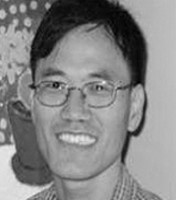
2012 Natural Sciences Laureate
Yong Geun Oh
CV
- B.S., Mathematics, Seoul National University
- Ph.D., University of California, Berkeley
- Professor, University of Wisconsin–Madison
- Chair's Van Vleck Professorship, Department of Mathematics, UW–Madison
- Visiting Research Professor, Research Institute for Mathematical Sciences (RIMS), Kyoto University
- Sabbatical Visiting Professor, Stanford University
- Invited Visiting Professor, National Institute for Mathematical Sciences (Fall 2009)
- Distinguished Professor, Pohang University of Science and Technology (POSTECH)
- Director, Geometry Research Division, International Science and Business Belt
- Member, Institute for Advanced Study (IAS), Princeton
Reason for Award
Professor Oh Yong-geun currently holds a chaired professorship in the Department of Mathematics at the University of Wisconsin–Madison and concurrently serves as a distinguished professor at Pohang University of Science and Technology (POSTECH).
Professor Oh is an internationally recognized mathematician leading his field, making original and outstanding contributions in symplectic topology and geometry, which are among the most actively researched areas in geometry and mathematical physics. His vigorous research activities have had a significant impact not only in his primary field but also in adjacent areas of study.
Recently, he was appointed as the sole director of the mathematics division at the Institute for Basic Science, a position through which it is expected he will elevate the stature of mathematics research in Korea.
Some of his achievements have been compiled into two monographs co-authored with Professor Fukaya of Kyoto University, which are recognized as textbook-level contributions in the field. Professor Oh has mentored students of various nationalities, including Korean, European, American, Indian, and Chinese, and has conducted joint research with Seoul National University, the Institute for Advanced Study, and the National Institute for Mathematical Sciences.
In particular, his recent appointment as the sole director of the mathematics division at the Institute for Basic Science is expected to further enhance the international standing of mathematics research in Korea.
Acceptance Speech
I do not have much skill in speaking, nor do I have amusing anecdotes like Professor Jeong-sik Lee. Mathematics, after all, is not a field that lends itself easily to storytelling. So, I will focus on explaining the motivation that led me to pursue mathematics.
Perhaps because my mother passed away early, there was no one at home to urge me to study. I discovered the joy of studying mathematics by solving the problems in my older brother’s workbook while preparing for high school entrance exams. In middle school, I was once suspended for not being able to pay tuition. When I idly stayed at home, my father encouraged me to at least attend school, and reluctantly, I went. My teachers pretended not to notice. The reason I continued studying is partly thanks to my teachers, my father, and my hardworking older brother, but I also think that my difficult circumstances played a role.
For me, studying became a refuge from economic and emotional hardship. When I studied, I could forget hunger and not feel the weight of unhappiness. The more I worked at it, the more I came to enjoy studying. My teachers praised me, and I gained a sense of pride in having something others could envy. In high school, I read a biography of Einstein and was deeply inspired. Against my father’s wish for me to enter law school, I chose to pursue physics in the natural sciences. By my second year, however, I set aside Einstein and entered the mathematics department, selecting the subject I truly loved. I simply enjoyed mathematics and devoted myself to it.
In my third year of university, I learned that I could study abroad. My advisor encouraged me to pursue this opportunity, and I received a scholarship to the University of California, Berkeley. At last, I could focus entirely on my studies without worrying about tuition or even my three daily meals.
Following the footsteps of previous mathematicians, pursuing degrees and careers, collaborating and competing with colleagues, I have reached this point, yet I feel as if my understanding of mathematics is just beginning. Mathematics is a form of reflection carried out with human reason and logic, a language that most efficiently expresses and conveys the principles of nature. Just as God originally endowed humans with the ability to create music and art, I believe He also gave us the ability to reason mathematically. The difference from music or art is that the value of mathematics is difficult to recognize without deep study, and even when its value is realized, it often takes a long time for that value to manifest.
For basic sciences such as mathematics to be recognized and to develop in society, it requires social awareness, sustained government policies, and the contributions of individuals with deep vision and insight, such as Kyung Ahm. Through their dedication, society comes to appreciate the value of academic and literary education, talented young people are guided toward scholarship, and the pride of those pursuing mathematics in various fields is preserved. I am deeply grateful for this.
I wish to express my sincere gratitude on behalf of myself. I thank the Korean Mathematical Society for recommending me and the selection committee for choosing me. I regard this award both as encouragement and as a stimulus to further dedicate myself to scholarship. Finally, I hope that more outstanding individuals with the noble spirit of promoting scholarship and literature, and nurturing talent, like Kyung Ahm, will emerge in our country.
Now, I will move on to a somewhat less entertaining topic. My current research is in symplectic topology, which has become a fundamental framework in classical mechanics and provides a geometric structure for describing Hamiltonian dynamics in abstract spaces called manifolds, forming the basis for quantum mechanics. This field is closely related not only to geometry and dynamics but also, in recent years, to theoretical physics, including string theory, although it can still be considered relatively new mathematics.
Symplectic topology is also the core subject of the research conducted at the Center for Geometry and Mathematical Physics at the Institute for Basic Science in Pohang, where I currently serve as director. Through this institute, I aim to lead significant developments in symplectic topology and related mathematics and physics, contribute to the advancement of mathematics both in Korea and globally, and foster collaboration with mathematicians around the world.
Thank you once again for your attention and support in all matters.