



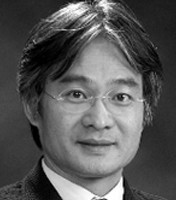
Laureate in Life Sciences
Bong Kiun Kang
CV
- Bachelor’s and Master’s degrees, Seoul National University
- Ph.D., Columbia University, USA
- Researcher, Pacific Technology Institute
- Researcher, Korea Advanced Institute of Science and Technology (KAIST)
- Post-Doctoral Fellow, Laboratory of Neurobiology and Behavior, Columbia University, USA
- Assistant Professor, Associate Professor, Professor, Seoul National University
- Professor, Department of Brain and Cognitive Sciences, Seoul National University
- Associate Dean for Research, College of Natural Sciences, Seoul National University
- Deputy Director, Institute for Basic Science, Seoul National University
- Associate Chair, Department of Biological Sciences, Seoul National University
- Editor-in-Chief, Molecular Brain
Reason for Award
Since 1994, Professor Bong-Kiun Kang has served in the School of Biological Sciences at Seoul National University, consistently conducting creative and pioneering research in neuroscience—particularly in the fields of learning and memory—over the past 28 years, and publishing world-class research achievements. Dr. Kang is currently the Editor-in-Chief of the international academic journal Molecular Brain and actively participates in academic and scholarly activities related to neuroscience both domestically and internationally. He has made remarkable contributions not only to the field of basic neuroscience but also to translational research aimed at elucidating the pathogenesis of neurological disorders.
Dr. Kang has published more than 100 research papers in world-renowned international journals, including Cell, Nature, Science, Neuron, and The Journal of Neuroscience. With such prolific research achievements, he is widely recognized as a leading, top-tier neuroscientist at the forefront of the global neuroscience community in the core field of learning and memory.
Acceptance Speech
First, I would like to express my deepest gratitude to Chairman Kumjo Song of the Kyung Ahm Education and Culture Foundation. I would also like to thank Chairman of the Judging Committee Jang-Moo Lee and the many judges who have honored me with the privilege of receiving such a great award. I must say that receiving the prestigious Kyung Ahm Prize, renowned for its highest authority, was made possible thanks to the members of my laboratory who have worked tirelessly day and night. I wish to share this honor with them. I am also grateful to my parents for giving me life and raising me, and I wish to share this joy with my beloved children and my wife as well.
Although I had a strong interest in the brain, there were not many brain researchers in Korea when I graduated from university. Therefore, I went to study in the United States to conduct advanced research. Escaping the poor research environment in Korea and entering the truly dazzling laboratories in the United States, I worked with excitement and enthusiasm, like a fish meeting water. I still think of it as one of the happiest times of my life. During that time, I made a resolution—to one day create in Korea a wonderful laboratory where young people would not need to go abroad to study. I take pride in having fulfilled that resolution by building a laboratory today that is on par with most leading laboratories around the world.
My research on memory phenomena began when I met Professor Eric Kandel. The questions that fascinated me were: How can we recall in an instant an event experienced decades ago? And how can the brain store memories for decades or even a lifetime?
I was born in Jeju, and in the second grade of elementary school, I spent three months in Busan with my father. It was then that I first went to a movie theater, and the final scene of that film moved me so deeply that even now my heart races whenever I think of it. The sound of trains, the scenery of the International Market—everything was new and fascinating. The rapid Busan dialect was completely incomprehensible to me at the time, and it was quite a shock. I eventually returned to Jeju. These memories have led me to study how such experiences are stored in our brains through physical changes. Although it has not yet been completely elucidated, in short, when a memory is stored in our brain, specific physical changes occur in small structures called synapses located at the ends of brain cells.
Synapses are microscopic structures formed by the connections between brain cells. Just as people meet, connect, and communicate to form a society, brain cells connect and communicate to form a network. While the global population is about 7 billion, the human brain contains about 100 billion neurons. Whereas a person might maintain relationships with hundreds of others over a lifetime, each brain cell connects through synapses to roughly ten thousand other cells. It is this enormous network that allows our brains to generate diverse and creative ideas.
Synapses change their structure and function in response to learning and memory, a phenomenon called synaptic plasticity. My laboratory has studied the functions of neurotransmitter receptors and protein kinases involved in synaptic plasticity, and we have identified the roles of various transcription factors in gene expression essential for long-term synaptic plasticity. We have also discovered dynamic physical changes that occur at synapses during memory recall. Furthermore, we found that when these processes malfunction, neurological and psychiatric disorders such as chronic pain, dementia, and autism can occur.
Looking back, I recall many hardships after returning from the United States and establishing my laboratory. Among them, the most challenging was experimental. To study changes in synapses caused by memory processes, neurons must be analyzed and sometimes destroyed, making it impossible to conduct such research with neurons from living humans. Therefore, high-quality research required using neurons from experimental animals, with larger neurons being more suitable. The animal with the largest neurons is the sea hare, called Aplysia. While it was easily available in the United States, it was impossible to find in Korea. At a critical juncture when my research depended on obtaining this animal, I traveled across the country in search of it. After much difficulty, I was fortunate to secure a stable supply through a female diver working at Jagalchi Market. The day hundreds of Aplysia first arrived from Busan to the aquarium in my lab, my students and I were overwhelmed with emotion.
The early members of my laboratory who shared those hardships are now Professor Hyung-Gyu Kim at Chungbuk National University, Professor Deok-Jin Jang at Kyungpook National University, Professor Jinah Lee at Hannam University, and Professor Jin-Hee Han at KAIST. I am also grateful to Professor Hyun-Sam Kang, then Director of the Genetic Engineering Research Institute at Seoul National University, who gave me the precious opportunity to conduct research at SNU, and who, along with his wife, is here today. He has always warmly encouraged me whenever I faced difficulties, for which I am deeply thankful.
In retrospect, although there were many hardships during my research, there were also rewarding achievements, including the production of outstanding students. I believe that staying steadfast on this single path, undeterred by life’s hardships, alongside my students, is what has brought me here today.
If I were to compare my research career to a marathon, I believe I have now reached the halfway point. I take this honorable award as encouragement to further accelerate my research journey ahead. The more I study the brain, the deeper I am drawn into its profound mysteries. Some worry that once the secrets of the brain are fully revealed, humanity will be diminished. I am convinced that as the brain’s mysteries are unveiled, we will be awed by its astonishing precision and will come to regard the essence of humanity with even greater wonder. Through my research, I aim to contribute to the ability to freely control brain function and ultimately help eliminate dementia and various neurological and psychiatric disorders.
I believe that it is the scholar’s role to see and discover things that others cannot. This, I think, is in harmony with the noble philosophy of Kyung Ahm, who has devoted himself to the nation and to humanity. I am deeply grateful to Kyung Ahm and to Executive Director Ae-Eon Jin for creating this honorable occasion that allows me to take pride in my life as a scholar. I also thank the distinguished guests, both domestic and international, for their attentive listening. Thank you.