



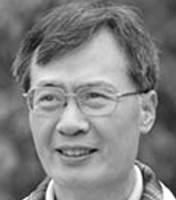
2011 Humanities and Social Sciences Laureate
Hee Sung Keel
CV
- B.A. in Philosophy, Seoul National University
- M.A. in Philosophy, Seoul National University
- Master of Divinity, Yale University Divinity School, USA
- Ph.D. in Philosophy (Buddhist Studies), Harvard University, USA
- Assistant Professor, Department of Religion, St. Olaf College, USA
- Assistant Professor, Department of Philosophy, Seoul National University
- Professor Emeritus, Department of Religious Studies, Sogang University
- Fellow Research Professor, Nanzan Institute for Religion and Culture, Nanzan University, Japan (Japan Foundation Fellow)
- Research Professor, Ecumenical Institute, University of Tübingen, Germany
- President, Korean Association for the History of Religions
- Director, Institute for the Humanities, Sogang University
- Director, Saegil Christian Institute for Social Culture
- Visiting Professor, Faculty of Theology, Catholic University of Leuven, Belgium
- Roche Endowed Chair Professor, Nanzan University, Japan
- Member, National Academy of Sciences, Republic of Korea
Reason for Award
Professor Hee Sung Keel is an outstanding scholar who has achieved world-class accomplishments in the fields of Buddhist philosophy and religious studies or comparative religion. Beyond these scholarly achievements, which were recently published in two volumes by Macmillan in the United States, Professor Hee Sung Keel is also highly regarded as a practitioner who strives for the ultimate fulfillment of 'the human as a religious being.'
Moreover, he emphasizes that mutual understanding, cooperation, and creative transformation between Buddhism and Christianity are indispensable tasks for contemporary and future Korean society. In other words, following the line of Hans Küng's anguished statement that "there is no world peace without peace among religions," he dedicates himself to the intellectual and practical task of 'mutual dialogue and cooperation between Buddhism and Christianity' on the premise that without true peace between Buddhism and Christianity, there can be no peace in Korean society and no development of a creative spiritual culture.
The major academic achievements of Professor Hee Sung Keel can be broadly divided into three areas. First is research on Buddhist thought, including the essential reading for Korean Buddhist studies The Zen Thought of Chi-nal and The Pure Land Thought of Japan, the only study of Japanese Buddhism written by a Korean, which has received favorable reviews abroad.
Second is research on Indian thought and philosophy, such as History of Indian Philosophy, a study of Indian philosophy introducing the historical objectivity and philosophical ideas of each school, and The Bhagavad Gita: Bilingual Korean-Sanskrit Edition, which presents a direct translation of the classic Bhagavad Gita from the Sanskrit original.
Third is comparative research on East-West thought and religion, including Meister Eckhart: An Asian Perspective, which approaches the ideas of the medieval German mystic Meister Eckhart from an Eastern, particularly Zen Buddhist, perspective, Jinul’s Zen Thought from a Comparative Perspective, and From Prajñā to Absolute Knowledge.
In addition to these three areas, he authored Bodhisattva Jesus and Interreligious Dialogue: Encounter between Buddhism and Christianity, attempting in-depth dialogue and creative encounters between Korea’s two major religions, Buddhism and Christianity. He also translated influential works that have become classics for broadening the scope and depth of religious understanding, such as Rudolf Otto’s The Idea of the Holy and Wilfred Cantwell Smith’s The Meaning and End of Religion, exerting a significant impact on the field of religious studies.
Acceptance Speech
When I first heard about the Kyung Ahm Academic Award, I was surprised to learn that such a prestigious award exists in our country. Even though it has already been seven years, it revealed to me how unaware I had been of the developments in the academic world. It is of course natural for a scholar to devote themselves consistently to their research, yet being officially recognized by such a highly esteemed academic award is both deeply gratifying and encouraging, motivating me to continue my research with even greater dedication. I would first like to express my gratitude to Mr. Song Geum-jo, who established this award, and to all those involved with the Kyung Ahm Academic Award. I also extend my thanks to my family, friends, and all distinguished guests who have taken the time to join us today to celebrate the recipients.
Looking back at this point in time, I realize that my four years of university life, spent oscillating between Christian faith, Western philosophy, and Eastern philosophy, had already determined the course of my fifty-year academic journey. It reaffirmed to me how crucial those four years are in a person’s life. After serving three years in the military and studying in the United States for nine years, I was able to study Christian theology, Eastern philosophy and religions including Buddhism, and comparative religion, gaining a broad understanding of the interrelations among world religions and cultures. Above all, my fourteen years in the United States strongly reinforced my awareness that I am Korean and Eastern, which has continuously inspired my interest in the religious and philosophical traditions of both the East and the West.
There is no denying that modern Western civilization has made significant contributions to humanity through its universal values of rationalism, science and technology, and democracy. However, it is also widely recognized that these modern values face serious limitations in various respects today. Above all, I cannot shake the thought that while Western modern thought has greatly contributed to liberating humanity from social oppression, it has simultaneously uprooted the spiritual foundations essential to human life, thereby possessing fundamental limitations in fulfilling the deep spiritual longing of humans. To be straightforward, I believe the fundamental problem of Western modern philosophy and thought lies in its abandonment of metaphysics. This has led me to maintain a sustained interest in world religions, particularly in the metaphysical traditions of the East and West during the medieval period. My personal conviction and scholarly focus lie in seeking ways to revive, in a contemporary context, the worlds of religion and medieval metaphysics, which are often dismissed as relics of a bygone era already overcome by Western modern civilization.
The challenge lies in the fact that the religious and metaphysical systems of the East and West are distinct and diverse. Therefore, a critical issue that inevitably arises when attempting to creatively revive religion and medieval metaphysics from a contemporary perspective is the problem of cultural relativism and religious pluralism. This issue is not merely theoretical but represents an urgent practical challenge for the modern world, where conflicts between religions, cultures, and civilizations must still be addressed while living within diverse religious traditions. Closer to home, it is also an urgent problem in our country’s religious community, where religious arrogance and narrow exclusivity are prevalent.
I have continued my research with the conviction that the modern world can and must face these challenges creatively. For this, serious dialogue and profound mutual understanding between religions and civilizations are essential, and, moreover, it is highly important to seek deep unity within diversity. To contribute even practically to this, I have established <Simdohaksa> on Ganghwa Island this year, a “house of study and meditation,” to cultivate a spiritual community that freely crosses the boundaries between religions and pursues a new spirituality.
I hope that receiving the Kyung Ahm Academic Award today will not only be a personal honor but also serve as an inspiration and a source of joy to many people who share and resonate with my convictions and thoughts. Thank you.