



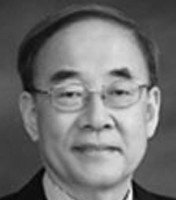
2011 Humanities and Social Sciences Laureate
Yung Sik Kim
CV
Bachelor of Engineering in Chemical Engineering, College of Engineering, Seoul National University
Master’s in Chemistry, Harvard University, USA
Ph.D. in Chemical Physics, Harvard University, USA
Master’s in History of Science, Princeton University, USA
Ph.D. in History, Princeton University, USA
Teaching and Research Assistant, Researcher in Chemistry, Harvard University, USA
Researcher in Chemical Physics, Battelle Memorial Institute, USA
Assistant Professor, Associate Professor, Professor, Department of Chemistry, Seoul National University
Visiting Researcher, Visiting Associate Professor in History of Science, Princeton University, USA
Program Director and Adjunct Professor, Interdisciplinary Program in History and Philosophy of Science, Seoul National University
Advisory Member, National Science and Technology Advisory Council, Korea
Board Member, Korea Federation of Science and Technology Societies
Professor, Department of Oriental History, Seoul National University
Director, Center for Science Culture Research, Institute for Basic Science, Seoul National University
Director, Kyujanggak Institute for Korean Studies, Seoul National University
Project Director, Templeton “Science and Religion in East Asia” Project
Reason for Award
Professor Yung Sik Kim is an outstanding scholar who has achieved world-renowned accomplishments in the history of traditional science in China and Korea, and a dedicated educator who established the field of history of science in Korean academia and developed it to a global standard.
In his papers exploring the natural philosophy of Zhu Xi (朱熹), the Song dynasty Neo-Confucian who exerted a profound influence on the intellectual history of China and East Asia, Professor Kim demonstrated that Zhu Xi’s Neo-Confucianism, previously examined mainly from the perspectives of metaphysics and ethics, includes natural philosophical discussions spanning astronomy, medicine, mathematics, and divination. In particular, by applying a macro perspective comparing Zhu Xi’s natural philosophy with contemporary European medieval Scholastic natural philosophy, he revealed the unique characteristics of Zhu Xi’s discussions on natural philosophy.
Since the 1990s, Professor Kim has also worked to elevate the level of research on the history of traditional Korean science and to internationalize it, building on his achievements in the history of Chinese science. His review article, “Problems and Possibilities in the Study of the History of Korean Science,” published in 1998 in the internationally recognized journal Osiris, surveyed the accomplishments and limitations of Korean history of science research since Lee Hong-Isup and explored the direction for future research, representing a rare achievement in introducing Korean history of science in depth to the global academic community.
Professor Kim’s accomplishments are not limited to the field of history of science. Reflecting his career pioneering the history of science at the boundary between the humanities and natural sciences, he has pointed out the cultural harm caused by the separation and disconnection between the liberal arts and sciences in Korean society and devoted his life to remedying this issue. His efforts have greatly contributed to pioneering the trend of interdisciplinary research that has recently gained attention in Korean academia.
Acceptance Speech
As I approach retirement from my professorship in just over a year, I occasionally find myself reflecting on my past academic career.
This prestigious award is an honor that far exceeds what I feel I deserve.
In particular, receiving it jointly with Professor Hee-Sung Gil, a senior whom I have long respected, is an immense honor for me, even if it may have been a slight burden to him.
Receiving this distinguished award is also a joyous occasion for the field of history of science, in which I have studied and conducted research over the years. While I consider the history of science to be an important discipline within the humanities and history, it has not yet been fully recognized as an academic field in our scholarly community. In this sense, I regard this award as a recognition of the field itself. I also accept it as a result of the dedicated efforts of my senior colleagues who have persevered under challenging circumstances.
Finally, I would like to express my gratitude to the selection committee and the Kyung Ahm Education & Cultural Foundation for choosing me, despite my shortcomings, as a recipient.
I am excited at the prospect of actively supporting the Foundation.
I will strive to make the Kyung Ahm Award even more distinguished in the future.
Thank you for your kind attention.