



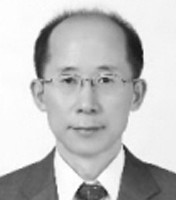
2010 Humanities and Social Sciences Laureate
Kyung Hwan Baik
CV
- B.A., M.A. in Economics, Yonsei University
- M.A., Ph.D. in Economics, Virginia Polytechnic Institute and State University
- Assistant Professor, Associate Professor, Appalachian State University
- Associate Professor, Professor, Sungkyunkwan University
- Visiting Professor, Virginia Polytechnic Institute and State University
- Chair, Department of Economics, Sungkyunkwan University
- SKKU-Fellow, Sungkyunkwan University
Reason for Award
Professor Kyung Hwan Baik is a world-renowned economist who holds a leading position in the field of economics, particularly in the research area of the theory of contests. Contest theory is a highly comprehensive research domain that examines various competitive situations in society, where participants strive and compete to obtain prizes, such as R&D competition, rent-seeking competition, auctions, litigation, electoral competition, arms races, and sports competitions. Understanding these competitive situations properly is extremely important, as it allows for comprehension of participants’ behaviors in competitions on a smaller scale and, on a larger scale, helps minimize social costs, prevent corruption, reduce social conflicts arising from competitive situations, and establish institutions and policies for harmonious social development.
His research has been recognized internationally, with his paper “Strategic Behavior in Contests: Comment” published in the American Economic Review, a leading journal in economics considered comparable to Nature. Additionally, four of his papers were included in the international specialized academic book 40 Years of Research on Rent Seeking 1: Theory of Rent Seeking, which compiles the most significant papers in the field of rent-seeking contest theory over the past 40 years. These accomplishments have established him as a leading scholar in contest theory. Based solely on his representative papers, his work has been cited 217 times, demonstrating significant impact. Moreover, his papers are frequently and prominently cited in core works by Professor Konrad, the leading scholar in contest theory, indicating their global quality. Furthermore, considering that Professor Baik’s papers are in pure theory rather than applied fields, his achievements are regarded as truly remarkable.
Professor Baik has also actively contributed to the international academic community. He has served six times as a referee for the American Economic Review, participated as a reviewer for a total of 70 international specialized academic journals, and presented at 25 international academic conferences, including seven invited lectures funded by the hosting institutions.
In recognition of his outstanding research achievements in contest theory, Professor Baik received the 1999 Cheongram Award from the Korean Economic Association in 2000, given to scholars under 45 with remarkable research achievements. In 2005, he received the 2004 Sungkyun Academic Award in the Humanities and Social Sciences category and the 2005 SKKU Fellowship, which provided two years of reduced teaching load of six credits per year and a special grant of 30 million KRW. In 2008, he was awarded the 38th Maeil Business Economist Award.
While it may be difficult to consider Professor Baik the top economist in Korea at present, given his demonstrated research capabilities and diligence, he is a scholar whose research is at its peak and whose future achievements are highly anticipated. In line with the purpose of the Kyung Ahm Academic Award, which is to honor scholars at the height of their research potential with promising future accomplishments, Professor Baik was selected as the recipient of the 6th Kyung Ahm Academic Award in the Humanities and Social Sciences category.
Acceptance Speech
First, I would like to express my gratitude for the establishment of the Kyung Ahm Academic Award, which aims to promote academic development and the flourishing of literature and the arts in our country.
Next, I sincerely thank the chairman and the committee members of the Kyung Ahm Academic Award for selecting me as the recipient of the 6th Kyung Ahm Academic Award in the Humanities and Social Sciences category.
Watching the movie Castaway, there is a scene where the protagonist, who survives alone on a deserted island after a cargo plane crash, makes a "tremendous" effort to light a fire. When the fire finally ignites, he gathers branches scattered along the beach to make a large blaze, feeling elated and proudly congratulating himself. What he achieved might seem trivial in another world, but in his world, it was extremely precious. Today, I stand here with the heart of that protagonist.
I am able to stand here today thanks to the countless teachings, encouragement, and support I have received from so many people. I am grateful to my parents, who selflessly sacrificed everything for my future; to my mother-in-law, who is always generous and gives abundantly; to my siblings, who put me before themselves; and to my beloved wife, Dr. Myung Ok Lee, who spares no effort to ensure that I can devote myself fully to research.
I would also like to thank Professor Gi-Jung Yoon and Professor Sung-Shin Han, who gave me courage and taught me life itself during my university years; Professor Jacques Cremer, who supervised my doctoral studies; and Professor Jong-Won Lee, who has always encouraged and guided me on the path of scholarship.
I extend my gratitude to Professor Shmuel Nitzan, Professor Tim Perri, Professor In-Kyu Kim, Professor Kai Konrad, Professor Jay Shogren, and my colleagues at Sungkyunkwan University, who accompany me on the often lonely journey of a scholar.
Looking back, I realize that the reason I am able to stand here despite my many shortcomings may be that I have always stayed where I needed to be and did not focus on the "outside" world. It seems that miracles truly happen if one does not give up.
My field of research, the theory of contests, deals with situations in which individuals or groups compete to achieve their objectives. Accordingly, contest theory examines very important competitive situations in the real economy, including R&D competition, rent-seeking competition, all-pay auctions, tournaments, litigation, election campaigns, environmental disputes, arms races, sporting contests, and university entrance competition.
My research so far has explored what strategic behaviors may arise among participants in competitive situations through game-theoretic analysis. This research is highly necessary. On a small scale, it allows us to understand the behaviors exhibited by participants in competitive situations, and on a larger scale, it provides a foundation for establishing institutions and policies to minimize social costs and corrupt practices caused by participants’ strategic behaviors, thus promoting harmonious social development.
Research on contest theory is actively ongoing, and even more studies will be conducted in the future. As one of the leading scholars in this field, I will strive even harder to expand and advance contest theory in gratitude for the great encouragement given to me today by the Kyung Ahm Education and Culture Foundation.
I hope to carry with me in my future research the excitement I once felt: the thrill of a prospective middle school student seeing the dazzling lights of Incheon from the deck of a ferry leaving the unlit Daechungdo in the early morning and arriving late in the evening; the excitement of a fearless student studying abroad, looking down at the skyscrapers of Chicago while the plane turns to land after departing from Gimpo Airport; that very sense of excitement, which I, an ordinary economist, wish to maintain throughout my research life.
I bow my head in gratitude to everyone attending today’s award ceremony and to all those who have prepared this ceremony.