



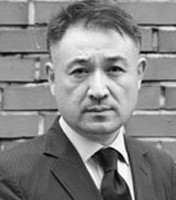
2009 Humanities and Social Sciences Laureate
Kyung Man Kim
CV
- B.S., Economics, Sogang University, Korea
- M.A. in Sociology, University of Chicago, USA
- Ph.D., Sociology, University of Chicago, USA
- Assistant Professor, Sociology, Sogang University, Korea
- Associate Professor, Sociology, Sogang University, Korea
- Professor, Sociology, Sogang University, Korea
- Fulbright Visiting Scholar, University of Illinois, Urbana-Champaign, USA
- Visiting Scholar, University of California, Riverside, USA
- Advisor, Samsung SDS, Korea
Reason for Award
Professor Kyungman Kim is a prominent mid-career sociologist who is exceptionally recognized not only in Korea’s social science community but also internationally, drawing attention from the global sociology field. His achievements can be broadly summarized into two main contributions.
First, he introduced the field of “sociology of science,” which was nearly unexplored in Korea, thereby making a significant contribution to the development of Korean sociology of science, while also establishing a research record acknowledged by the international sociology of science community. Professor Kim’s first book, Explaining Scientific Consensus: The Case of Mendelian Genetics, received high praise from Professor Warren Hagstrom, a leading authority in the sociology of science, in Contemporary Sociology, the American Sociological Association’s specialized review journal. In addition, a lengthy review of about 20 pages was published in Social Studies of Science, the most prestigious journal in the field, and it was also well-received in Isis, another authoritative journal. Professor R. Collins, a chair professor at the University of Pennsylvania, described the book as “opening a new breakthrough in the sociology of science.” Furthermore, the book has been widely cited beyond sociology of science, in the fields of history and philosophy of science. Professor D. Hull of Northwestern University, a world-renowned philosopher of science and former president of the Philosophy of Science Association, stated that “anyone interested in understanding what science is should definitely read this book.” In Korea, Professor Kim also published Scientific Knowledge and Social Theory, the first advanced introductory book on the sociology of science, which has greatly contributed to the recent integration of science with the humanities and social sciences.
The second major achievement of Professor Kyungman Kim is his book Discourses on Liberation: An Anatomy of Critical Theory, published simultaneously in Korea and the United States in 2005 after eight and a half years of research [Korean edition: 담론과 해방: 비판이론의 해부]. This book critiques the social theories of J. Habermas, P. Bourdieu, A. Giddens, and the philosopher R. Rorty, proposing alternative perspectives. It has received high praise from leading scholars in global critical theory, including Z. Bauman, R. Collins, C. Lemert, and N. Denzin. Reviews of this book appeared in top sociology journals such as British Journal of Sociology, Philosophy of the Social Sciences, and Contemporary Sociology. It has also been included as required reading in theoretical sociology courses at several graduate schools in Canada and the United States. Unlike many domestic works that merely summarize the theories of these renowned scholars, this book critically examines their ideas from Professor Kim’s unique perspective and proposes original alternatives, thereby elevating Korean sociology to “world-class standards.” This achievement was recognized with the 2008 Book Award from the Korean Sociological Association.
Professor Kyungman Kim has actively participated in global sociological discourse and accumulated a track record of contributions by publishing his research simultaneously in Korea and abroad. He is particularly esteemed as a social scientist who remains devoted to his field without distraction, maintaining the scholar’s duty. Although relatively young for a social scientist, Professor Kim has conducted research representing Korea on the global stage and possesses the potential to achieve even greater development, emerging as a leading global sociologist. Before congratulating him on this award, the reviewers wish to emphasize that this recognition not only celebrates Professor Kim’s personal growth but also imposes the responsibility of expanding dialogue and communication, thereby revitalizing the academic field.
Acceptance Speech
First, I would like to express my deep gratitude to Chairman Song Geumjo and his wife of the Kyung Ahm Education and Culture Foundation, the members of the judging panel, and the foundation staff for allowing me to stand in such an honorable place today. I also want to thank my father, my beloved wife and daughters, and my students, who have always understood and encouraged my academic work.
A major question I have carried with me since studying at the University of Chicago—and still have today—is why Korea, with a history of over 100 years of importing Western scholarship, remains largely a net importer of knowledge in the humanities and social sciences. The American pragmatist philosophy that runs from William James and John Dewey to Richard Rorty provides important hints on how we might develop world-class humanities and social sciences. Both James and Dewey were scholars who drew philosophical inspiration from European philosophy. Yet they created pragmatist philosophy through careful analysis, criticism, and challenge of European philosophy. Rorty, by consolidating such critiques, made pragmatism into a global philosophy.
One unchanging principle that has guided my research thus far is to challenge and critique Western theorists, and through this challenge and critique, to develop theories that surpass them. All of my books and papers published in the United States and Europe represent attempts to seek new alternatives through critique and challenge of Western masters. Of course, I am fully aware that my current academic abilities and depth are still insufficient to surpass them. Challenging and overcoming Western theory is impossible through the efforts of a single individual; it requires Korean social sciences to first secure autonomy, and only within such an autonomous scholarly space can rigorous analysis and critique of Western theories be achieved through mutual criticism and encouragement.
The difficulties I have faced, I believe, largely stem from what I have called the “confusion of topics and theoretical resources,” which pervades the Korean humanities and social sciences. That is, when one deals with Korean topics, it is considered Korean scholarship, whereas when one deals with Western theory and critique, it is deemed detached from Korean topics and immersed in Western thought. Yet the problem is that even when dealing with Korean topics, all resources used to explain them ultimately rely on Western theoretical resources. To achieve world-class humanities and social sciences, Korea must first conduct rigorous study, analysis, and critique of Western theories. However, the current Korean social science community has often relied on borrowing Western theories without such analysis and critique, focusing instead on political and topical, ad hoc prescriptions. Now is the time for Korean humanities and social sciences to develop more fundamental theories that can challenge Western theory within an autonomous scholarly space independent of political, topical, and popular demands.
Finally, I would like to briefly mention how I intend to fulfill the responsibilities imposed by the judges. I have already begun the work of mapping the landscape of Korean social sciences. The core of my research is to identify the social conditions necessary for Korean social sciences to produce world-class research, by analyzing and critiquing how power derived from knowledge produced in the Korean humanities and social sciences is reproduced through the dominant academic culture. This research is likely to be highly controversial and provocative, but for precisely that reason, I hope it can contribute, even in a small way, to the revitalization of discourse and communication within the Korean social sciences. Thank you.