



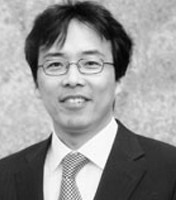
2009 Life Sciences Laureate
Young Joon Kim
CV
- B.S. in Microbiology, Seoul National University
- M.S. in Microbiology, Seoul National University
- Ph.D. in Biology, Stanford University
- Professor, Department of Biochemistry, Yonsei University
- Assistant Professor, Sungkyunkwan University School of Medicine
- Postdoctoral Researcher, Department of Cell Biology, Stanford University
- Senior / Principal Researcher, Samsung Life Science Research Institute
- Underwood Distinguished Professor, Yonsei University
- Korean Representative, HFSP International Organization, Scientific Committee
Reason for Award
Professor Young Joon Kim is one of Korea’s leading life science researchers who has been at the forefront of global molecular genetics and biochemistry for the past 30 years. Professor Kim, in particular, has already earned a worldwide reputation as a scientist through his outstanding research achievements in the field of epigenomics.
Epigenomics, recognized as the most significant conceptual advancement since Mendelian genetics, reveals that heredity can be significantly influenced by environmental factors without mutations. This provides new concepts for mechanisms such as changes in stem cells and the development of cancer, and explains how environmental causes contribute to the onset of various diseases, thereby holding great potential to advance future medicine.
Professor Kim’s creative research activities have directly contributed to the excellence of his scientific achievements. One of his representative works on the Mediator complex, published in Cell in 1994, has been cited 667 times and was recognized as one of Dr. Kornberg’s Nobel Prize achievements in 2006. Furthermore, his 2007 paper published in Annual Review of Biochemistry, the most authoritative journal in biochemistry and molecular biology, provides professional reviews of all research developments in the field, commissioned from leading scientists. This journal publishes only about ten papers annually, and being invited to publish therein is a significant honor recognized by the global scientific community. To date, Professor Kim’s paper remains the only one from Korea in this journal.
Moreover, three of his recent papers were published in Nature Immunology and Nature Genetics, journals with nearly a 30 Journal Impact Factor in 2009, demonstrating the high influence of Professor Kim’s research results.
As seen above, Professor Kim has made important contributions to the development of epigenomics from its early stages and is expected to continue leading this field as an international leader.
In conclusion, considering Professor Kim’s outstanding academic achievements to date, his pioneering role in advancing new fields of science, and his leadership within the domestic and international scientific community, he has been selected as the recipient of this year’s Kyung Ahm Scientific Award in the Life Sciences category.
Acceptance Speech
Thank you.
When I heard that I had been selected as a recipient of the Kyung Ahm Award, I was filled with indescribable joy. Moreover, having my family and close relatives willingly share in that joy made it a truly delightful month.
I would like to extend my deepest gratitude to all those who have helped me along the way and to the Kyung Ahm Education and Cultural Foundation.
As the excitement of receiving the award gradually subsided while receiving your congratulations, I began to reflect on why I was honored with such a prestigious award and what its significance might be. Looking back on the path I have taken to reach this honored position, I realized once again that I owe a tremendous debt to many people.
First, I am deeply grateful to my parents, who gave me life and nurtured me so that I could walk the right path. Although they are now elderly and could not be present with me today, thanks to their continued concern for their children, I have been able to live a healthy and upright life.
I also owe much to my wife, who has generously sacrificed for me and our family, making it possible for me to achieve such a good outcome. My standing here today, and the fact that my son and daughter have grown up so well, would not have been possible without my wife’s devoted love. I wish to express my greatest gratitude to her.
I am also grateful to my now-grown son, who is a second-year university student, for quietly trusting me and growing well. It is a great encouragement that my son, following in the footsteps of me and my wife, aspires to become a life scientist. This makes me feel an even greater responsibility to be a role model as a scientist.
I also want to thank our youngest, Jihyun, who gives me unconditional love and great strength, and I want to tell her that her father loves her.
I would like to extend my sincere thanks to Professors Yoon Jong-bok, Lee Seung-taek, and Lee Won-tae of the Department of Biochemistry at Yonsei University, as well as Dean Jung In-kwon and Professor Jo Jin-won, for creating an environment in which I can conduct research freely and for their support. Thanks to their trust and support, even under difficult domestic circumstances, I have been able to achieve good results.
Although only students Lee Wook-bin and Choi Eun-young are present here today as representatives, I must dedicate today’s honor to all the students and postdoctoral researchers in my laboratory, who trust me and devote themselves to research day and night. I believe that the many research results and new discoveries we have achieved would have been impossible without their sincere efforts.
I would also like to thank Professors Kang Hyun-sam, Bruce Baker, and Roger Kornberg, who have guided me. I believe that all three endured much to teach me how to conduct research independently and how to grasp the core of problems. I am deeply grateful for their guidance and will continue striving to follow their example.
There are many others who have given me support and encouragement, but due to time constraints, I am unable to thank them all individually, for which I apologize.
I believe the greatest meaning the Kyung Ahm Award holds for me is that it has given me an opportunity to reflect on the path I have walked so far. It makes me determined not to be satisfied with small achievements, but to set even greater goals and continue striving. If my past efforts were driven by scientific curiosity, I wish my future efforts to go beyond intellectual satisfaction and contribute to society. In particular, I hope that the life sciences will uncover the causes of diseases and make a significant contribution to human welfare. I aim to combine every small effort to help understand the causes of diseases. I also feel that I must strive even more to ensure that such efforts are passed on to younger scientists. Today’s occasion serves as a moment to reaffirm my commitment to diligently research the principles underlying life phenomena and to apply them, even in small ways, to contribute to disease treatment. I ask for your continued encouragement and support so that I may not become complacent with minor successes and can embark on this journey with a renewed spirit.
Finally, I would like to express my deepest gratitude once again to Chairman Song Geum-jo and all members of the Kyung Ahm Education and Cultural Foundation who made this honorable occasion possible.