



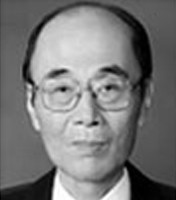
2008 Humanities and Social Sciences Laureate
The late Myung Hwan Jung
CV
- B.A. in French Language and Literature, College of Liberal Arts, Seoul National University
- Ph.D. in French Language and Literature, College of Liberal Arts, Seoul National University
- Professor, Seoul National University
- President, Korean Society of French Language and Literature
- Professor, Catholic University of Korea
- Full Member, Korean Academy of Sciences
Reason for Award
Professor Myung Hwan Jung, at the age of 80, remains an active scholar who has devoted his entire life to the study of French literature and the humanities. He has systematically integrated Western literary studies into Korean literary research and criticism, continuously engaging in profound humanistic reflection, and is recognized as a leading figure in the field of foreign literature.
As one of the first generation of scholars approaching foreign literature with the methodological awareness that studying the Other leads to self-exploration, Professor Jung’s extensive and rigorous literary theories and research, written in a dignified and meticulous style, have created a groundbreaking turning point in Korean foreign literature studies, distinguishing the field “before and after Myung Hwan Jung.”
The Sartre research pioneered by Professor Jung has been inherited and developed through the “Korean Sartre Study Association.” He has also made remarkable contributions in translation, achieving a singular mastery through precise and elegant translations, which are exceptionally rare in the Korean context.
Despite his advanced age, in recent years he has demonstrated relentless scholarly passion and dedication, producing five books and numerous articles since the publication of For Reason and Language (2003). Professor Jung, through his outstanding academic achievements, originality, intensity, and sincerity in both life and research, has become a revered intellectual mentor among researchers of foreign literature and the wider literary scholarship community.
The field of foreign literature, while central to the humanities and encompassing many scholars and academics, has relatively low social recognition compared to other fields. Professor Jung’s award not only honors his scholarly accomplishments but also carries the additional significance of inspiring and uplifting the morale of humanities students in contemporary society. Above all, his consistent efforts, research, and innovative scholarly contributions provide invaluable lessons and guidance for both the academic community and future generations.
Acceptance Speech
Honorable Chairman Geum-Jo Song and his spouse of the Kyung Ahm Education & Culture Foundation, Chairman Byung-Young Ahn and members of the Kyung Ahm Academic Award Committee, and distinguished judges,
First, I would like to once again express my deepest respect to Chairman Geum-Jo Song and his spouse and wish them both good health. I also wish for the continued development and prosperity of the Kyung Ahm Education & Culture Foundation. Thank you.
Over the past fifty years, I have expanded the scope of my interests from French literature to Korean literature, general literary studies, and the human condition in contemporary contexts, and I continue to navigate among these various fields. However, I must confess that I have no remarkable achievements in any single area to claim, which makes this honor feel somewhat excessive to me.
Nonetheless, I can say that throughout this process, I have striven to adhere to three guiding principles. The first is rational practice. I do not believe that reason alone can solve every problem. In some respects, it may be a function lower than intuition, emotion, or religious experience. Yet I firmly believe that, above all, it is essential to fully exercise reason in all academic pursuits.
The second principle I have endeavored to uphold is caution against hasty judgment. Drawing unwarranted conclusions or making premature assertions based on meager evidence or simplistic preconceptions can mislead oneself and others and negatively affect the historical accumulation of thought. I have always considered repeated questioning and exploration to be far more valuable than succumbing to such facile attitudes.
The third principle I have sought to pursue is maintaining the stature of a universal intellectual. Given today’s cultural environment and the heightened level of scholarship, we must move beyond the framework of peripheral intellectuals. For our present and future, we still need the stimulus of other cultures, and we must strive to engage with them not in confrontation but in dialogue, developing the capacity to understand them critically.
Of course, I do not claim to have faithfully practiced these three principles in all my scholarly endeavors. I humbly believe that my selection for this award is due to the traces of such efforts found in several books I have recently published, and I console my own inadequacy with that thought.
At the same time, I sincerely thank the teachers, seniors, family, and colleagues who have guided me over the long years and would like to make a request. I hope that in the course of my continuing scholarly pursuits, I may be given advice and encouragement to ensure that I do not tarnish the honor of the Kyung Ahm Academic Award. I also express my gratitude to Moonhakgwa Jiseongsa, Minumsa, and Hyundae Munhaksa for willingly publishing my modest works. I intend to commemorate this meaningful award by contributing the prize money to a fund supporting the study of French literature for future scholars.
Finally, I would like once again to express my deepest respect to Chairman Geum-Jo Song and his spouse, wishing them good health, and to extend my best wishes for the continued success and prosperity of the Kyung Ahm Education & Culture Foundation. Thank you.