



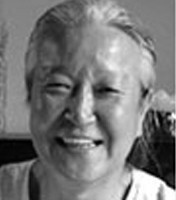
2008 Arts Laureate
Kwang cho Yoon
CV
- B.F.A., Department of Crafts, College of Fine Arts, Hongik University, Seoul, Korea
- Studied Abroad, Karatsu, Japan
- Jury Member, Dong-A Crafts Exhibition
Reason for Award
Kwang cho Yoon, a Buncheong ceramic artist, devoted his entire life as a full-time artist to his creative work and is an original artist who has contributed to the rediscovery of traditional Korean ceramics and their globalization through modern transformations of traditional ceramics.
Kwang cho Yoon recognized the value of Buncheong early on, and in the 1960s, during a period when Korean traditional culture was under threat, he focused on mid-Joseon Buncheong ware as a repository of Korean traditional culture. Until the 1970s, he devoted himself to the reproduction and inheritance of traditional Buncheong. Entering the 1980s, he pursued a major transformation in his ceramic life. After realizing the special relationship between Joseon-era Buncheong art and Korean Seon (Zen) Buddhism, he visited Songgwangsa in Jeollado in 1984 to seek learning.
Subsequently, the teachings of Seon, which emphasize meditation and reaching truth through self-reflection, profoundly influenced his work. This led directly to his lifelong endeavor of modernizing Buncheong ware. In the late 1980s, Kwang cho Yoon boldly abandoned the potter’s wheel and transitioned to plaster mold work, slab work, and coiling techniques. According to him, this was due to a “sense of crisis that his technical skill on the wheel might surpass the art itself.” He later even discontinued plaster mold work, thereby entering a freer and more autonomous world of ceramic creation.
After abandoning the wheel, Kwang cho Yoon’s ceramics diversified into triangular and square columns and flat oval shapes, resulting in broader flat surfaces. On these flat planes, rather than curved surfaces, he freely expressed the painterly qualities of his works. His modern reinterpretation of traditional ceramics shines even more in his efforts to preserve the inherent practicality and functionality of ceramics. He was the first in Korean ceramic history to use the concept of “everyday vessels.”
Kwang cho Yoon’s original ceramic work was recognized domestically when the National Museum of Modern and Contemporary Art named him “Artist of the Year” in 2004. He also held solo invitational exhibitions at prominent American public art museums, including the Philadelphia Museum of Art (2003) and the Seattle Art Museum (2004), where his works received high acclaim and were collected. In addition, his works are permanently housed in the British Museum in London, the National Gallery of Victoria in Canberra, Australia, and the Marion Royal Museum in Brussels, Belgium.
In this regard, Kwang cho Yoon’s Buncheong ware can be seen as a precious achievement of our art that proudly represents not only the level of Korean craftsmanship but also the overall cultural standard of Korea to the world. His rediscovery of Korean ceramics and efforts to globalize them will continue to serve as a valuable catalyst and springboard for the development of our art and culture.
In his youth, he encountered Kwang cho Choi, former director of the National Museum of Korea, and became aware of ceramics. Later, through encounters and exchanges with the painter Jang Uk-jin, he learned the “density of simplicity.” Currently, he resides in Geupwoldang, also known as Baramgol, in Ankang-eup, Gyeongju, Gyeongbuk, devoting himself solely to his work.
Acceptance Speech
Thank you. Receiving such a prestigious award is more than I deserve and is an immense honor. Moreover, this award will not only encourage me personally, but also serve as a great motivation for all full-time artists in Korea who continue their solitary work under difficult conditions.
Our past ceramic culture was extremely brilliant, and even today, its value is recognized by people all over the world. However, contemporary ceramics have lost their way. Unlike other fields, there is a lack of general understanding of contemporary ceramics, and maintaining a personal studio requires substantial financial resources and continuous labor.
Not only in ceramics, but across all fields including painting, sculpture, architecture, music, and literature, the recurring theme is “tradition and modernity.” What is tradition? Tradition is not a preserved form from the past. Tradition must be alive. It must be created. This is because culture is born with the local climate as its mother and time as its father. It includes the past, present, and future simultaneously. Modernity does not mean Westernization. Modernity is a matter of time, not a geographic reference. Similarity to Western forms does not mean globalization.
I believe that a work of art expresses a person’s “agonizing purity” and the “sweat of labor” in an independent visual language, creating a shared empathy with others. Art is not created by surprising ideas or knowledge, but by purity, solitude, and passion. “One must be mad, yet must not go mad.” “The head and heart must be above the clouds, while the feet stand firmly on the ground.” I think an artist is someone destined to live with these extremely contradictory and paradoxical conditions simultaneously.
What I aim to express in my work is “freedom and naturalness.” A new form that is not unfamiliar, the intersection of chance and inevitability, contrast and harmony — through these, I want to convey freedom and naturalness. By steadily studying these themes, I believe there will come a day when I can fully reveal freedom and nature as they are.
I believe I am able to stand here today thanks to those who understand and cherish my life and my artistic world. I sincerely thank these people as I conclude my acceptance speech. Thank you.