



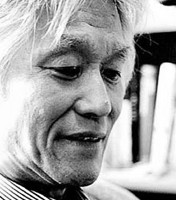
2006 Arts Laureate
Hyon Jong Chong
CV
- B.A., Department of Philosophy, Yonsei University
- Debuted as a writer in Modern Literature (1965)
- Reporter, Seoul Shinmun
- Deputy Manager, Publishing Department, JoongAng Ilbo
- Professor, Seoul Institute of the Arts
- Professor, Department of Korean Literature, Yonsei University
Reason for Award
Since debuting in the literary world in 1965, poet Hyon Jong Chong has persistently expressed the vitality of life and the primal energy of nature in twelve volumes of original poetry, using beautiful and lyrical Korean.
His poetic works celebrate the lively human body and intuitively grasp the hidden wisdom in the details of nature—flowers, trees, wind, and fragrance—discovering the virtues of life. Through this, humans are awakened to the ability to breathe fresh life and pursue free dreams, thereby living an existentially beautiful and genuine life.
This outstanding literary creativity, born of high lyricism and deep contemplation, has been translated and published as individual poetry collections in Germany, the United States, and Russia. In addition, over ten introductions in foreign literary journals and multiple public recitations in international literary circles have earned high acclaim abroad, promoting the level of Korean poetry on a global scale. His illustrious awards, including the Midang Literature Prize, the Daesan Literary Award, and the Isan Literary Award, further attest to these achievements.
His unwavering passion for literature and ever-growing affection for poetry signal even greater accomplishments in his future creative endeavors.
Acceptance Speech
First, I would like to express my gratitude to the Kyung Ahm Academic & Cultural Foundation and everyone involved. I also thank the members of the judging panel who evaluated my work, as well as the senior and junior colleagues and many teachers who have traveled a long way to be here.
Although writing a poem like this may not reduce the production, sale, or use of weapons of mass destruction—a topic we discuss extensively these days—I hope that, in a small way, my intentions might be conveyed from heart to heart.
As you all know, there is a word in Korean, “a-kkinda,” which has two meanings. One refers to saving or using material goods or objects sparingly. The other refers to cherishing or valuing something precious, including people. I believe that this notion of cherishing is extremely important, not only in our society today but globally, in human society. When we fail to cherish, various problems arise; conversely, when we cherish, positive outcomes follow.
In poetry as well, it is not just words that should be cherished. We should also cherish people, the expressions of living things, peaceful moments, and valuable things. Being sensitive to these aspects and reflecting them in my work—although I cannot say whether this fully comes across in the final piece—has always been the foundation of my writing. Such an attitude, of valuing what we should cherish, could prevent wars and foster better developments in politics, economy, and other social spheres.
Today, I will read a poem I wrote long ago during the Gulf War, when missiles were being launched. Although it may seem unusual for a poet to worry about national security, these issues remain pressing, especially on the Korean Peninsula. The poem, titled Intercepted Poem, is inspired by the idea of interception missiles. It imagines that, in the face of weapons of mass destruction, all we can do is to "launch our hearts." I will now read the poem.
Intercepted Poem
There are no other weapons.
I launch my heart.
The Tomahawk missile fell and became ash, gently settling down.
The Scud missile flew and, greatly repentant, self-destructed.
The Jaguar missile became a flower at the moment it fell.
The Patriot missile flew and turned into a dove in midair.
The Crazy missile fell into the sea and became a fish.
The Madman missile fell into the desert and became a cactus.
The Self-Devil missile fell in front of a house and became a butterfly.
The Despair missile rolled into a kitchen and became a spoon.
The Playboy missile sneaked into a young woman’s room and became Eros.
The Money missile entered a poor household’s bedroom and became gold.
The Iron missile became a hoe that plants flowers in the ground.
The Jegu-dung missile flew into a dry factory and destroyed it.
The Mercury missile became very small and whispered into a child’s ear.
Let us trade this for candy; we shout over the ruins of corpses.
(Strengthening the power of the UN even further)
The UN must adopt a resolution to permanently stop weapon development from now on.
Although writing this poem may not directly reduce the production, sale, or use of weapons of mass destruction that we often talk about nowadays, I hope that, in a small way, my intention may be transmitted from heart to heart.