



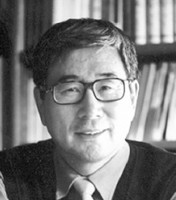
2005 Humanities and Social Sciences Laureate
Dong Il Cho
CV
B.A., College of Liberal Arts, Seoul National University
Ph.D., Korean Literature, Graduate School, Seoul National University
Professor, Yeungnam University
Professor, Academy of Korean Studies, Institute of Korean Studies
Professor, Seoul National University
Distinguished Professor, Keimyung University
Reason for Award
Professor Dong Il Cho conducted in-depth research on classical Korean literature, and he expanded the scope of his research from Korean literature to East Asian literature, and from East Asian literature to world literature.
Furthermore, his work was highly evaluated for applying the facts, methods, and theoretical achievements obtained from studying Korean literature and writing literary history to East Asian literature, thereby comparing the characteristics of each country’s literature and clarifying their interrelations.
Acceptance Speech
I am grateful to the person who arranged this significant award. I am pleased to have been selected as a recipient. I once again reflect on the help that allowed me to devote myself fully to scholarship. These three sentences already convey what I wanted to say. However, having repeated myself, I find it difficult to stop, so I will add a few more words.
A true researcher extremely dislikes administrative tasks that take away from research time. To bear the humiliation of rejection is an even more unreasonable demand. The best award is one that changes the process of recommendation and evaluation, secretly selects the recipient without them noticing, and then asks them to accept it.
Humanities are often misunderstood as being pursued due to personal taste, rather than being recognized as a discipline that corrects fundamental values and creativity. It is groundbreaking that, for the first time, a significant award, previously given only to natural sciences, was extended to a field in the humanities. Although there is still an imbalance—combining humanities and social sciences into one category while dividing natural sciences into two—having a humanities scholar receive a major award is unprecedented. I wish to share this joy, thinking that I receive this award on behalf of all my peers walking the same path. Hoping that the number of protagonists of joy continues and grows, I also wish to request that the three academic fields be treated equally.
Awards are withheld when unnecessary and granted when not urgently needed. There is a saying that mocks awards: an award is necessary so that a scholar, deeply engaged in research, can not only receive encouragement and courage but also secure research funding without cumbersome procedures or strict conditions. Yet, some regret that recognition often comes after leaving research, calling it a service award. While this is not the case for my fellow awardees, as the oldest among them, I have stepped back from the frontlines of research and am now focusing on completing my work with care. Had I received this award ten years ago, the joy would have been several times greater. Please do not chide me by saying, "There was no Kyung Ahm Academic Award back then," when I speak this way.
The real question is whom to award this honor in the future. It should find and support talent who, conducting outstanding research at the peak of their work, will use research funds without conditions to create tenfold value from one unit of investment. It is inappropriate to require that those who wish to receive the award submit necessary documents, verified achievements, and obtain recommendation letters to compete for it.